Are you starting to learn the Serbian nominative and accusative cases? Seven cases, three genders, different endings, singular and plural forms. Do you feel like a child with so many puzzle pieces? Not sure where to start? Don’t worry. I will guide you every step of the way.
Nominative Case Usage
Time to introduce the first puzzle piece: the nominative case. Are you ready? Let’s dive in.
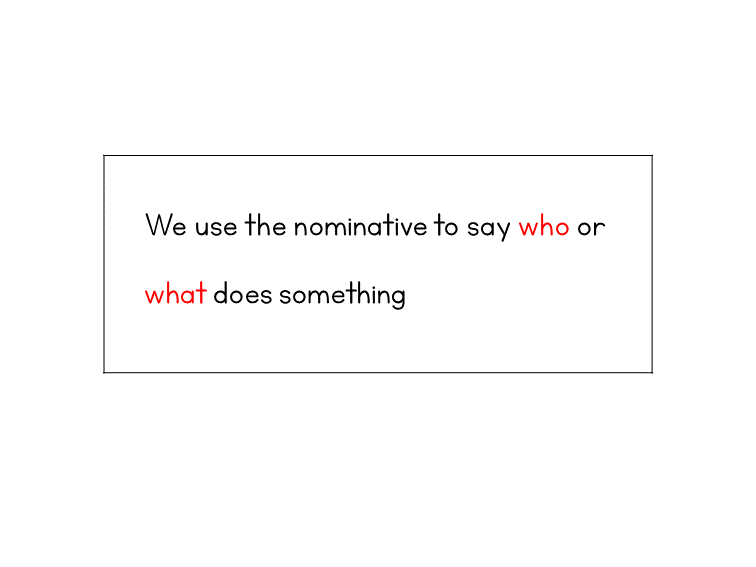
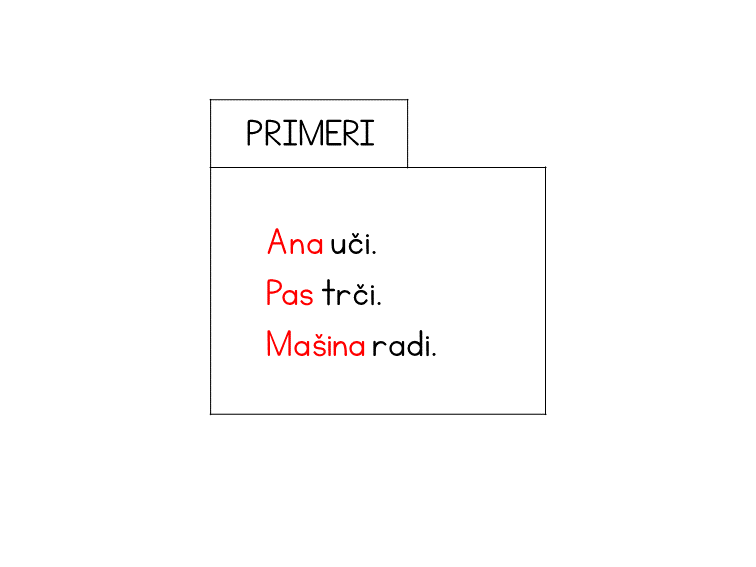
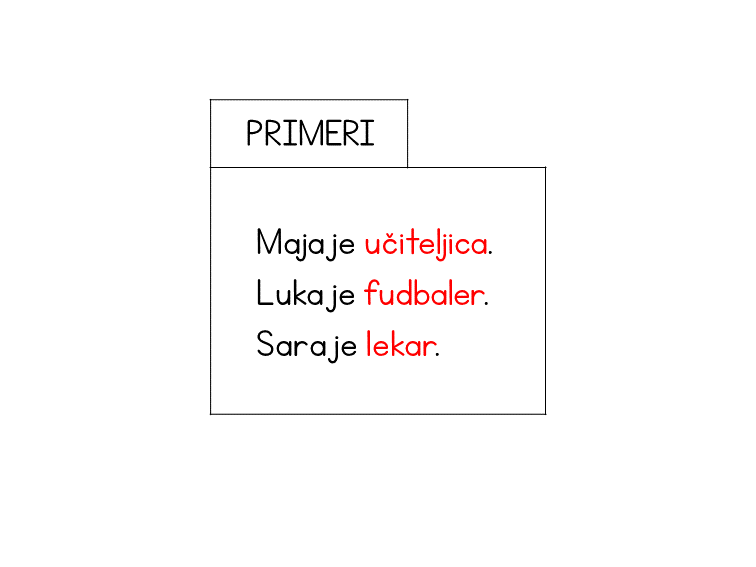
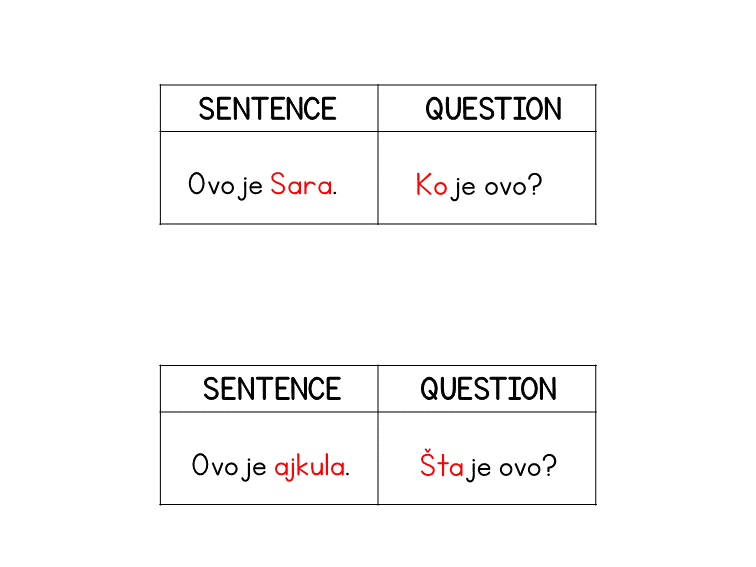
Let’s go through some examples together. Please note that nouns in red are in the nominative.
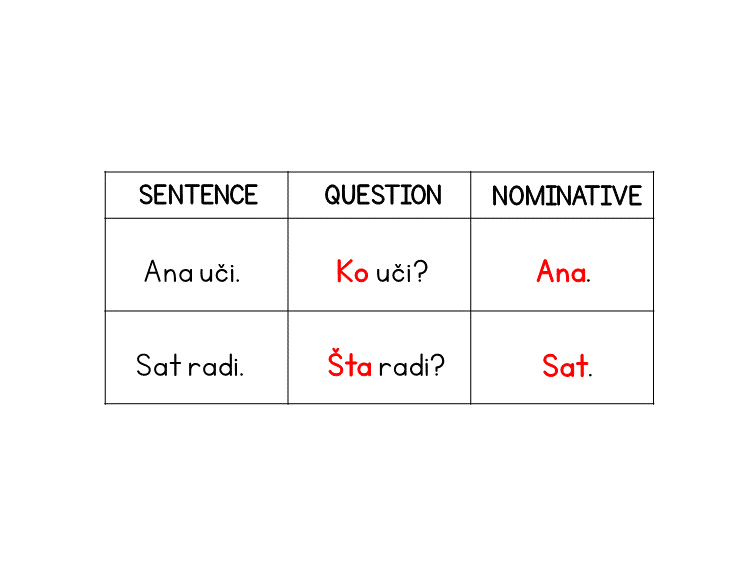
Now, let’s check out the table below:
- Read the sentence (Ana uči.)
- Read the question and pay attention to the question word. (Ko uči?)
- Identify the nominative (Ana.)
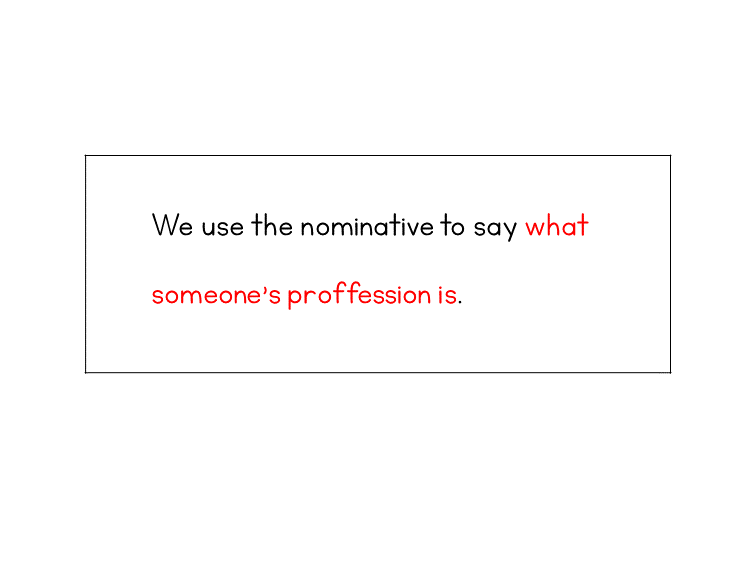
Here is one more way to use the nominative:
What is the best way to memorize the rules? The answer is simple: examples!
You’ve read the rules and examples but still feel confused? Don’t worry! Take a look at the table below.
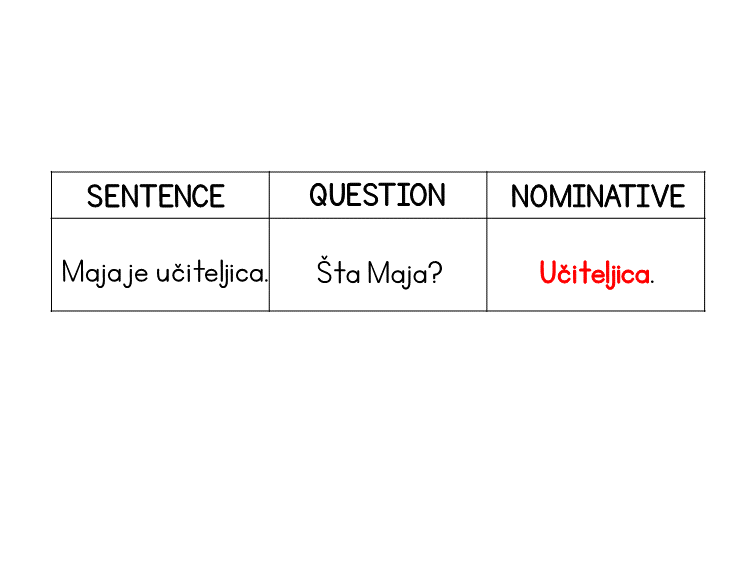
- Read the sentence (Maja je učiteljica.)
- Read the question and pay attention to the question word. (Šta je Maja?)
- Identify the nominative (Učiteljica.)
We can all learn the rules. Piece of cake! The tricky part is knowing how to apply them. I’ve got some great news! Just follow the 4 steps:
- Memorize the rules
- Read the examples
- Identify the rules in words/sentences
- And finally, practice, practice, practice
Let’s introduce one more way we can use the nominative:
STEP 1
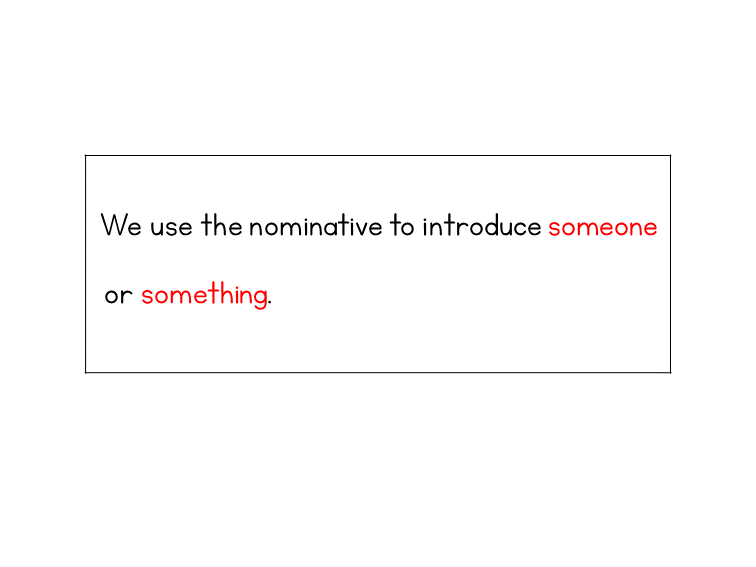
STEP 2
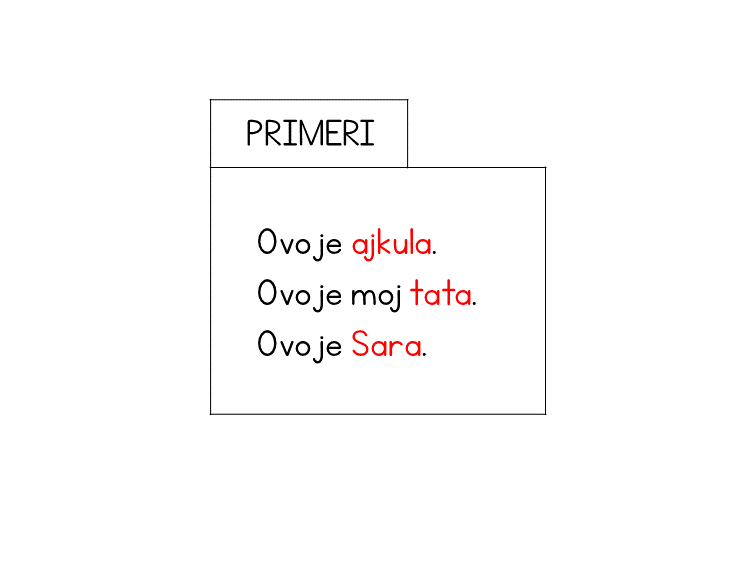
STEP 3
STEP 4
Let’s check what you’ve learned so far. Take a few minutes to review the rules, or grab a pen and a notebook and take notes as you read the post. It’s time to practice.
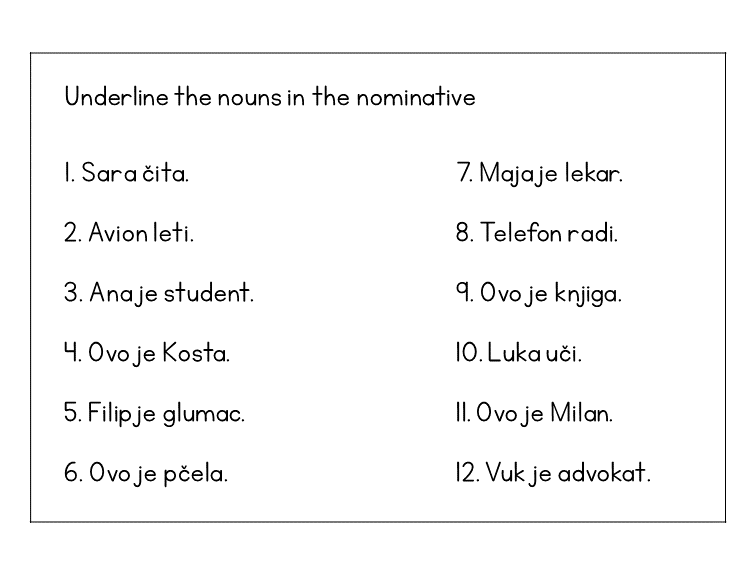
Answer keys: Sara, avion, Ana, Kosta, Filip, glumac, pčela, Maja, lekar, telefon, knjiga, Luka, Milan, Vuk, advokat.
Accusative Case
I present to you the next puzzle piece, the accusative case. Most students find learning the Serbian accusative case challenging, but it’ doesn’t have to be. Today I’ll share with you a few quick tips to help you learn the Serbian cases without being overwhelmed.
TIP 1: Learn step-by-step – don’t try to learn everything at once: singular and plural form, masculine, feminine, neuter gender, exceptions.
TIP 2: Learn the rules and patterns.
TIP 3: Identify the rules and patterns in examples.
Accusative Case Usage
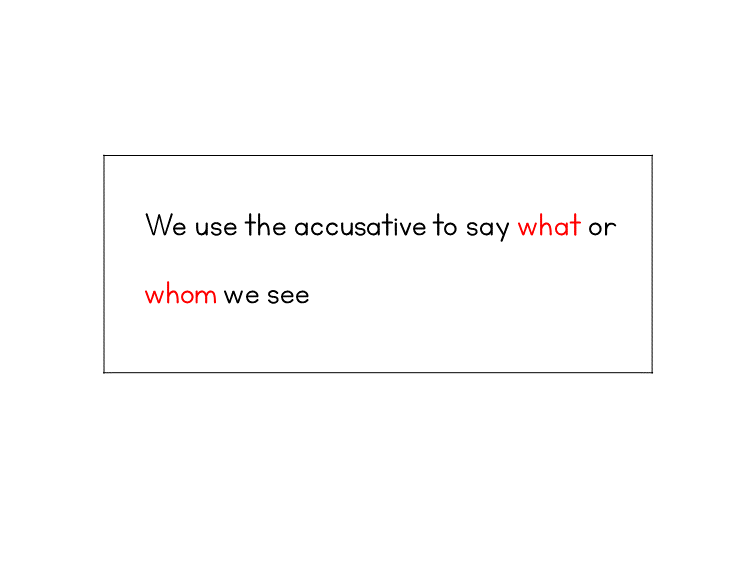
We’ve covered the rules. What comes next? Examples!
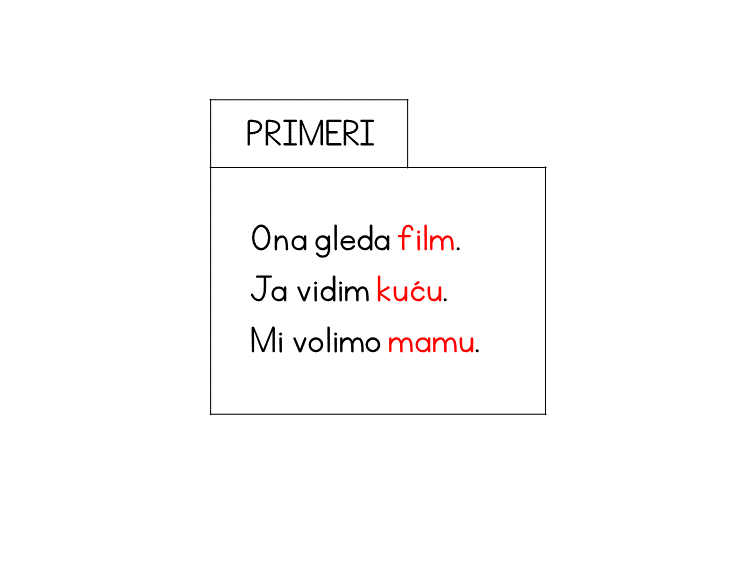
- Now, let’s take a look this sentence. (Ona gleda film.)
- Read the question.(Šta ona gleda?)
- And the answer is…?
You’re right. Film.
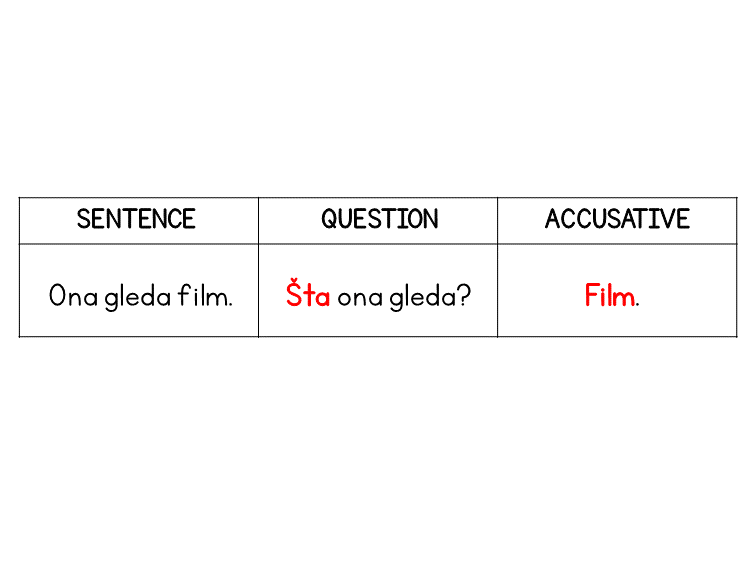
Is that nominative or accusative? You’re right again. It’s accusative.
You’re doing great. Just keep going and soon all the puzzle pieces will fit perfectly.
Feminine Nouns Accusative Case
Serbian nouns have three genders: feminine, masculine, and neuter.
Rules, patterns, genders… I know it feels like a lot. Don’t stress about it! Let’s start with feminine nouns.
Now it’s a good time to apply the 4 tips we mentioned earlier.
Tip 1: Learn step-by-step
Tip 2: Check out the table below and identify the pattern. Grab a piece of paper and write down the pattern.
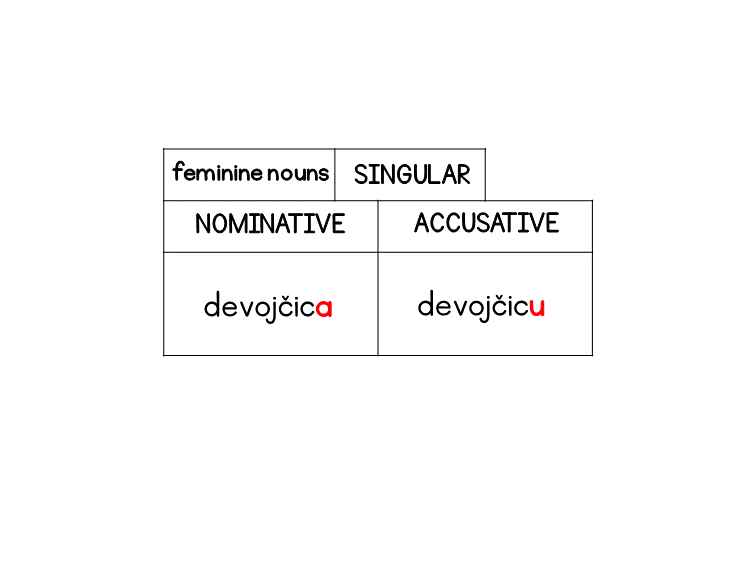
Now, let’s check if your patterns matches the one below:
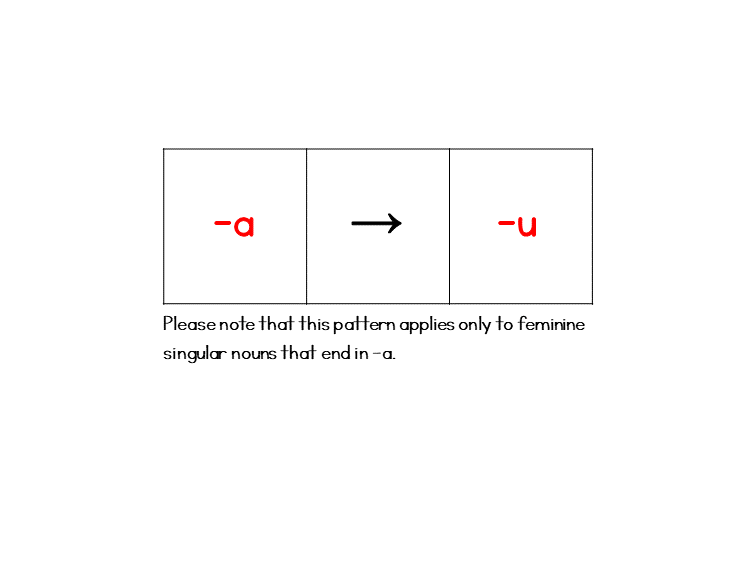
Tip 3: Put the noun in singular accusative case
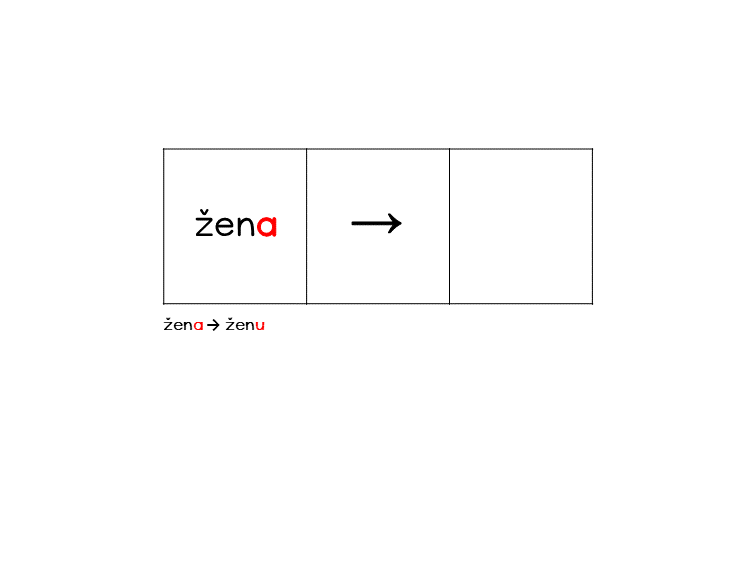
The Accusative case doesn’t sound tricky any more?
Step by step, all the puzzle pieces will slowly come into place!
Neuter Nouns Accusative Case
I’ve got some great news! Are you ready? Just take a look at the table below.
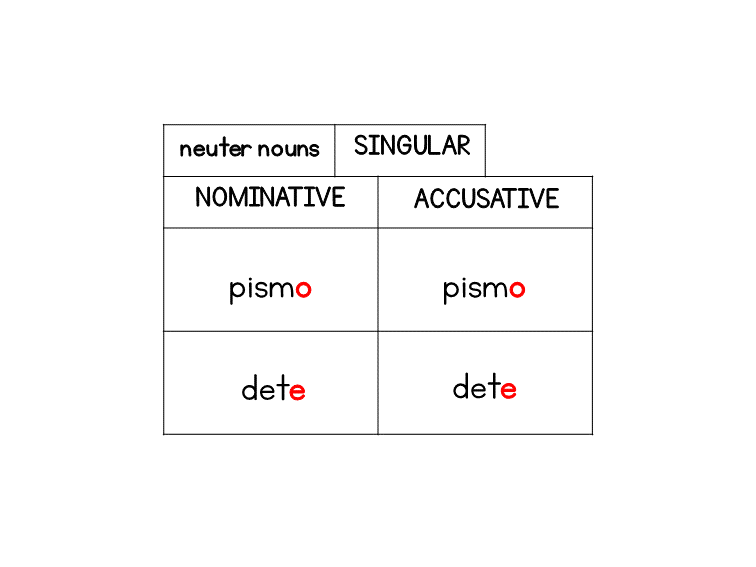
What do you notice? There is no change. Neuter singular nouns have the same form in the nominative and accusative cases.
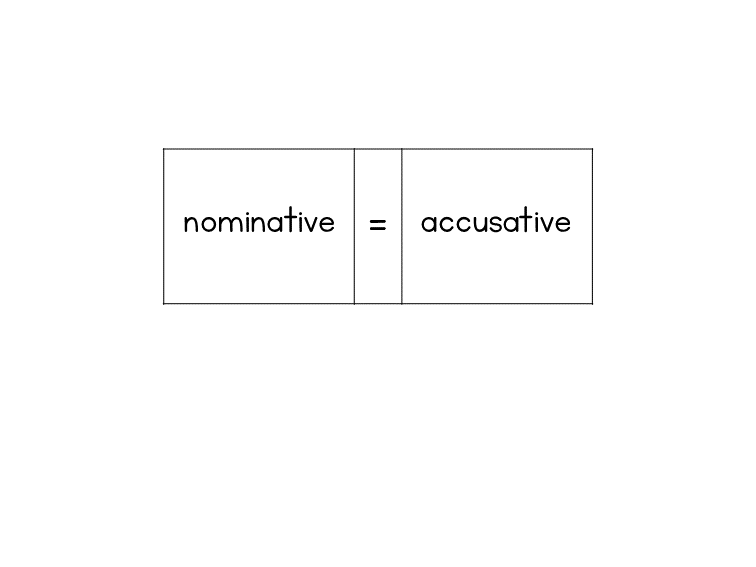
Masculine Nouns Accusative Case
This is where it becomes tricky again. But don’t worry. Take a deep breath, and let’s do this step by step, puzzle piece by puzzle piece.
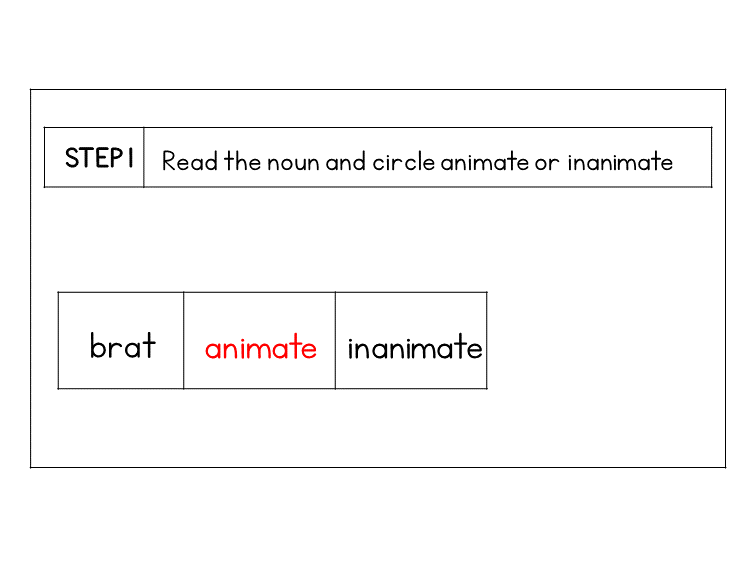
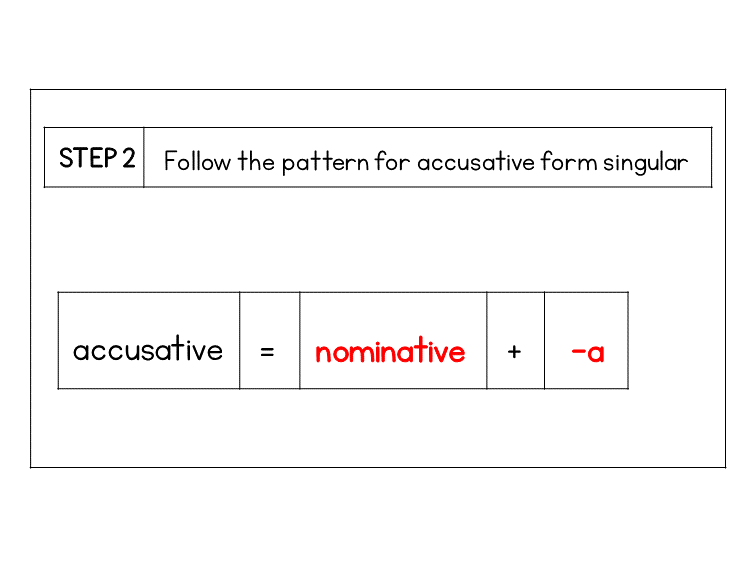
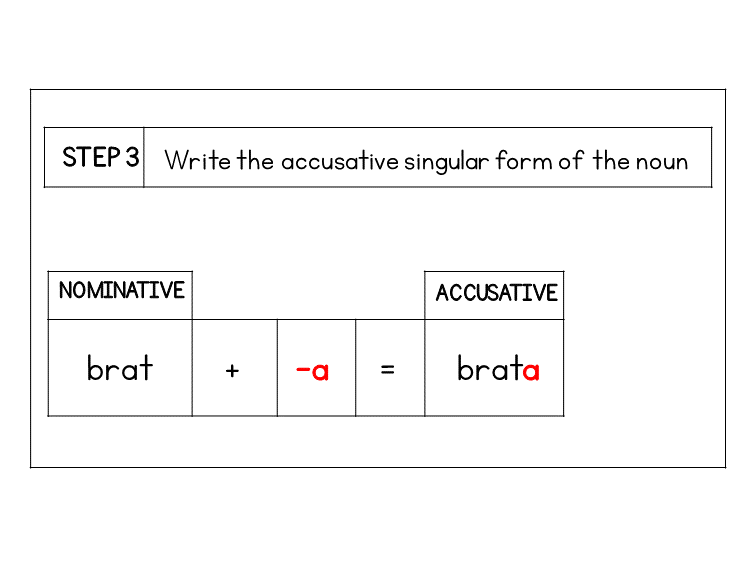
Pay attention to STEP 1. This step is super important. If you can identify animate and inanimate nouns, you’ll learn the masculine accusative form in no time.
Here is one more example:
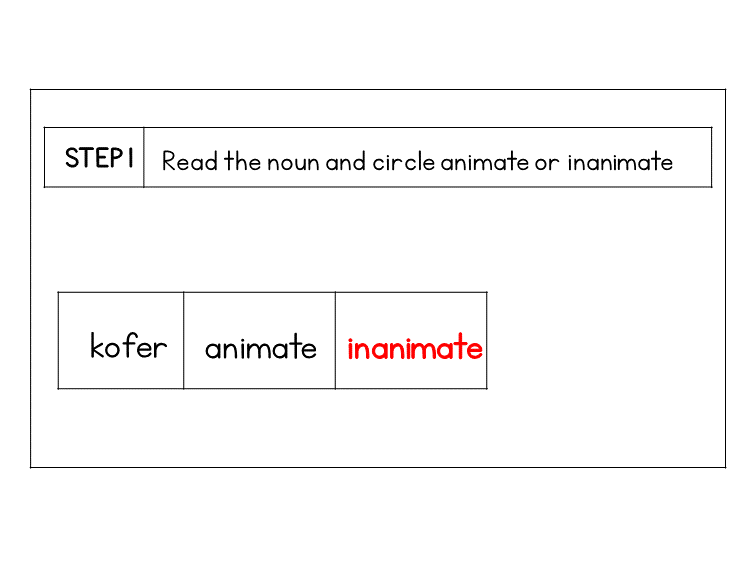
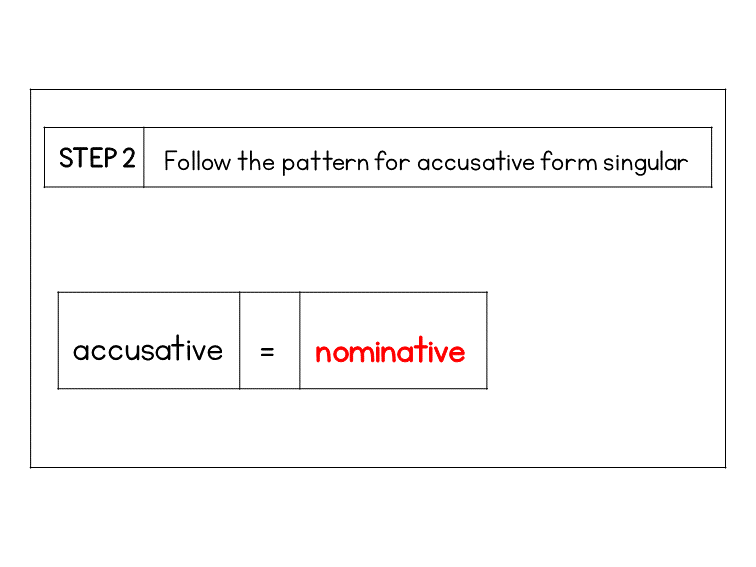
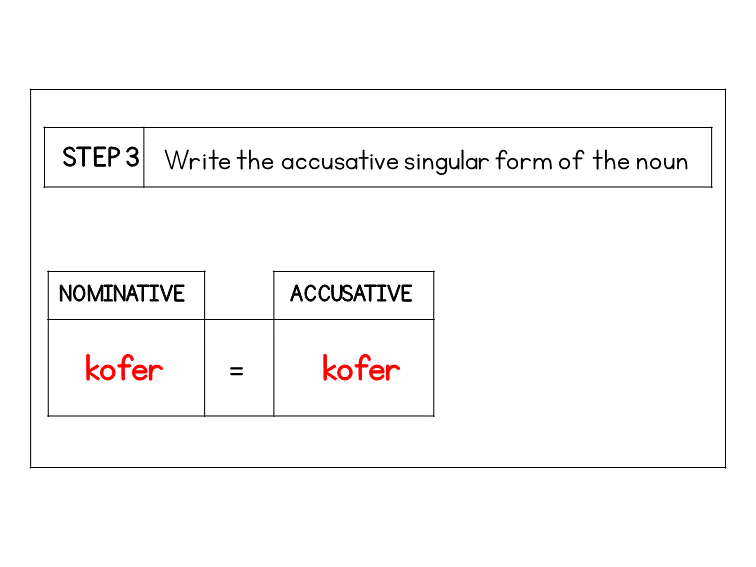
Noun kofer is inanimate. And here’s the good news! Inanimate masculine nouns don’t change in the accusative case.
What is the best way to master the grammar of any language? It’s simple! Practice, practice, practice! Take a minute to revise the steps for both animate and inanimate nouns and do the following exercise.
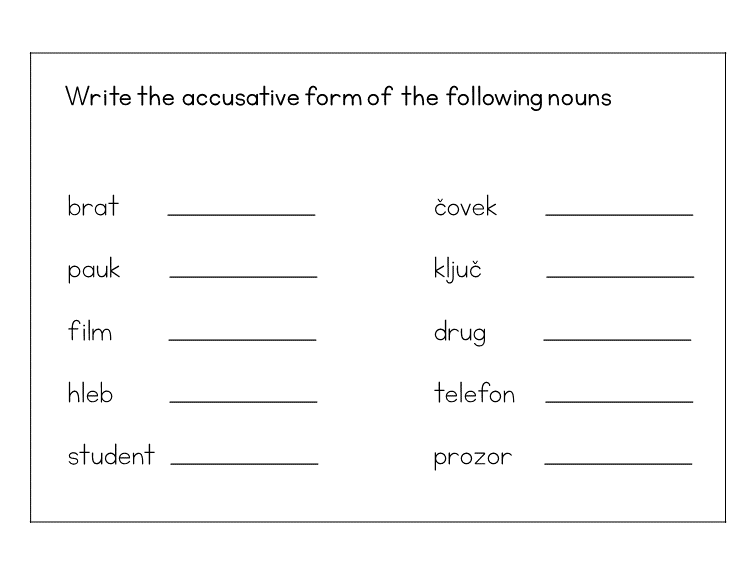
Answer keys: brata, pauka, film, hleb, studenta, čoveka, ključ, druga, telefon, prozor
QUICK TIP: Grab a pen a notebook and write down the tips, steps, patterns and don’t forget the examples.
How to identify accusative and nominative?
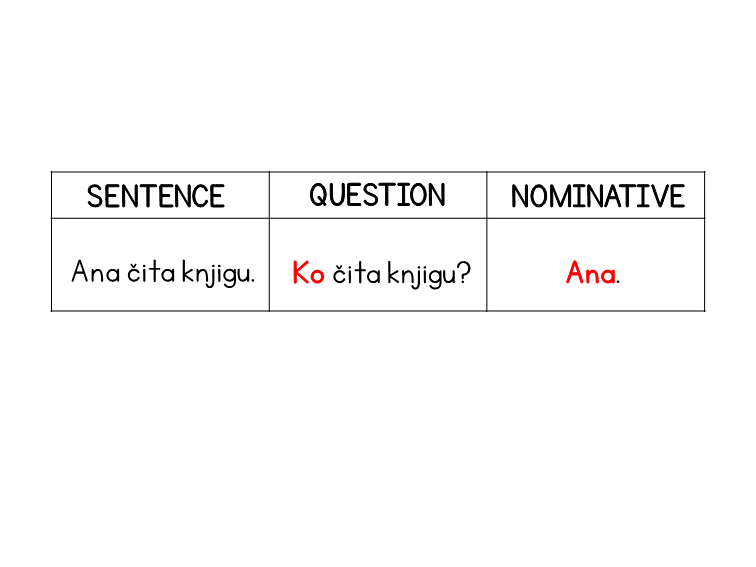
Take a look at the first table. Ana čita knjigu. Ko čita knjigu? Ana. What do you notice? Look at the question word ( Ko?) and the answer (Ana). Can you identify the nominative? That’s correct! Ana.
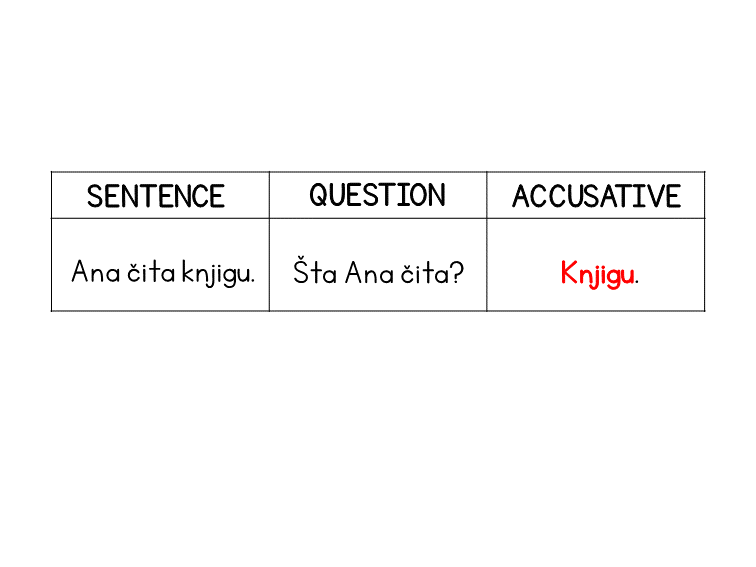
Now let’s go through the second table. Ana čita knjigu? Šta Ana čita? Knjigu. Can you identify the accusative? You’re right again! Knjigu.
It’s time to … Practice!
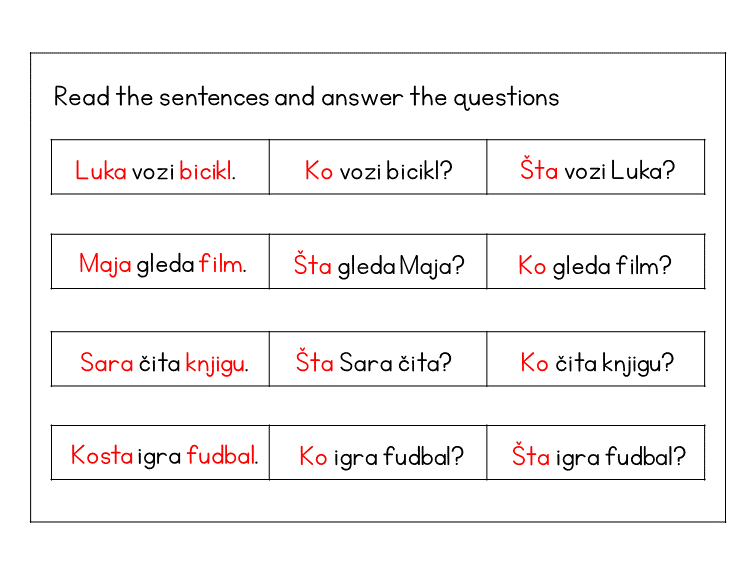
Answer keys: Luka, bicikl; film, Maja; knjigu, Sara; Kosta, fudbal
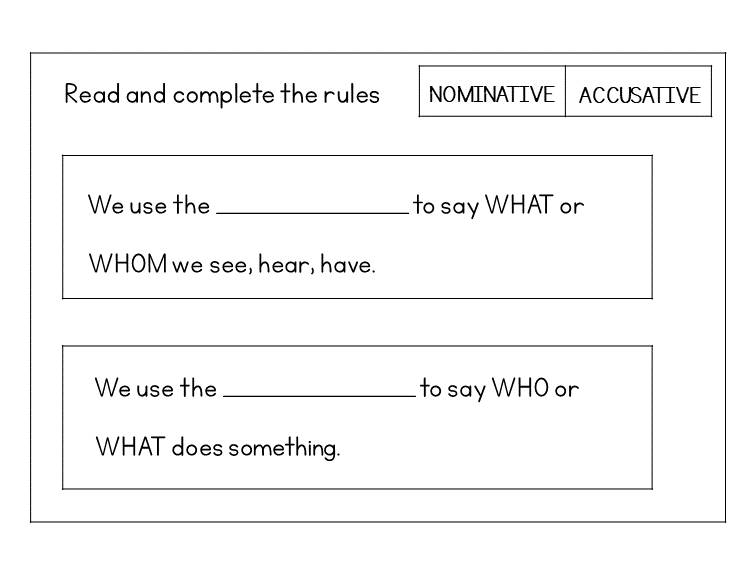
Answer keys: We use the accusative to say what or whom we see, hear, or have. We use the nominative to say who or what does something
Finally, all the puzzle pieces fit, and we can see the whole picture. The accusative case doesn’t look so scary anymore, right?
But remember, practice makes perfect! If you would like more practice, check out my Serbian Nominative and Accusative Case Worksheets.