Cases

Nominative, accusative, genitive, dative, instrumental, locative and other case explanations.

Serbian Genitive Case:  A Step-by-Step Guide

Serbian Genitive Case: A Step-by-Step Guide

When you start reading about the Serbian genitive case, you might think, “I can’t do this!”

I feel you. Three genders, singular and plural forms, and if that isn’t hard enough, the genitive has so many different uses that can make your head spin.

If you’ve read my post about nominative and accusative cases, you know that we’re not going to try to learn everything at once.

Serbian Genitive Case: When Do We Use It?

Do you want to know when to use the genitive case?

We use the genitive case to express possession, absence, quantity, origin, and movement away from something.

Let’s take a look at the image below.
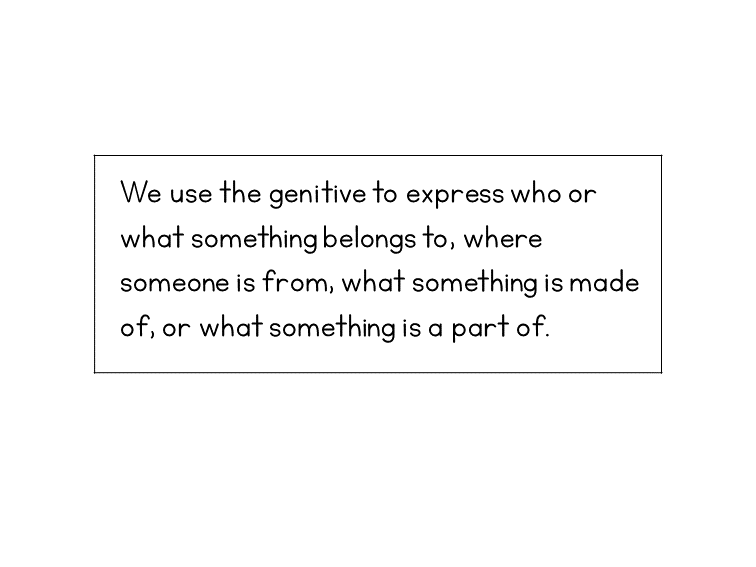
Definition of Serbian genitive case and its uses

Too much information? Don’t worry! Let’s take a look at some examples.
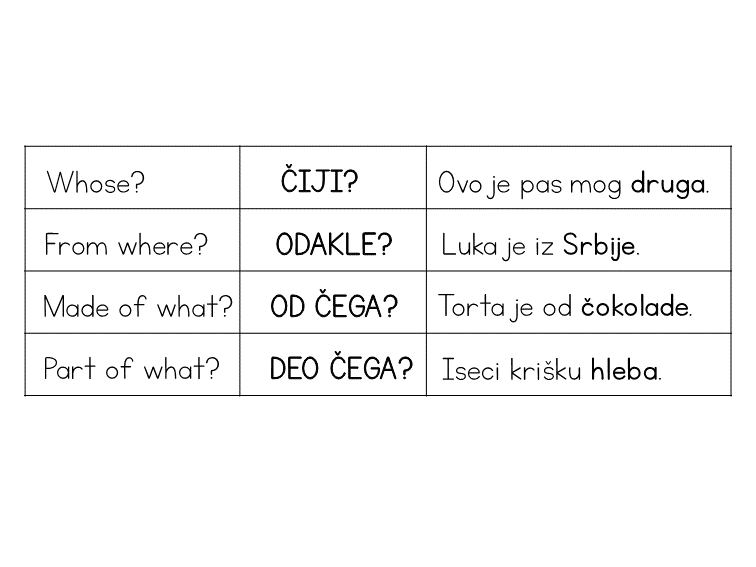
Serbian genitive case uses with english questions and Serbian examples

Still confused? With every puzzle piece, it will get easier. I promise.

Serbian Genitive Singular Feminine Form

Before we introduce the genitive singular form, read the following nouns and complete the rule.
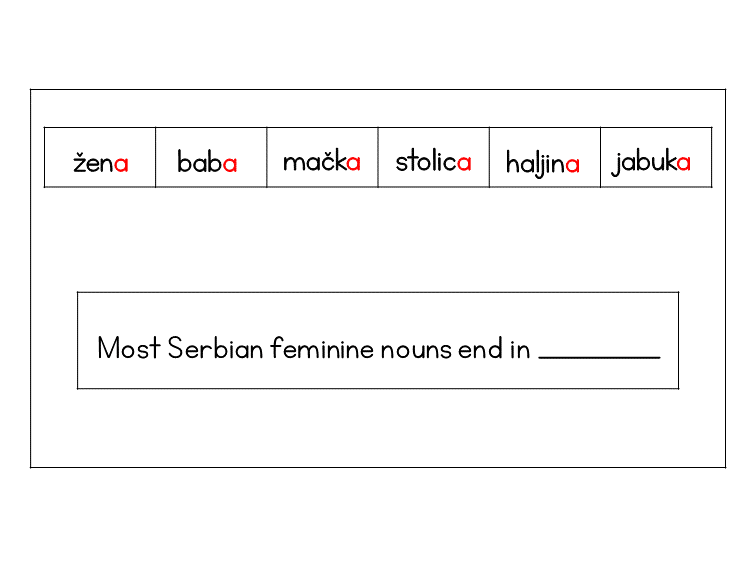
Serbian Genitive Case: feminine nouns ending in -a

Answer key: Most Serbian feminine nouns end in -a.

What is the best way to learn the Serbian cases? Through examples and patterns. Take a look at the table below.
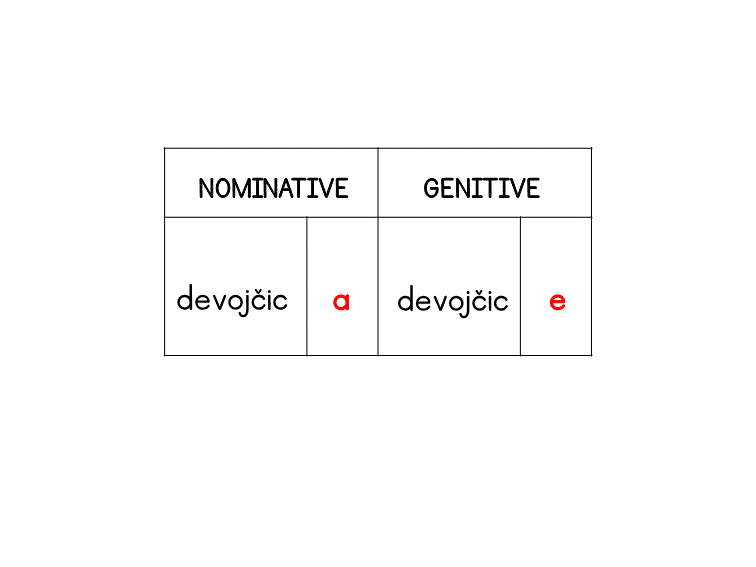
Serbian genitive example: devojčica (nominative) changes to devojčice (genitive)

Learning the rules is important, but it’s not enough. The next step is to analyse the examples. What does it mean? Pay attention to the ending of the noun in the nominative and genitive cases. Do you see the pattern?
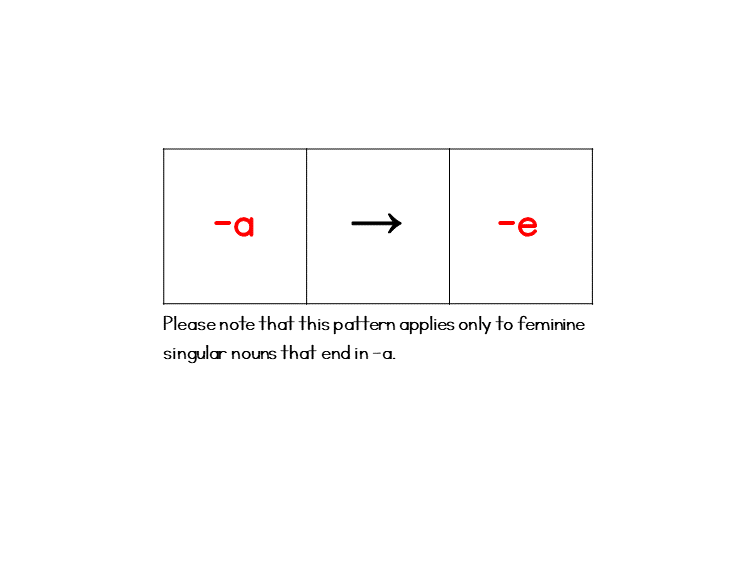
Serbian genitive singular pattern for feminine nouns ending in-a, which change to -e

If a feminine noun ends in –a, its genitive singular form usually ends in –e. I told you it would get easier with every step we take!

Singular Masculine Nouns in the Genitive

It’s time for another puzzle piece: masculine and neuter nouns in the genitive singular. But first, let’s complete three tasks:

TASK 1. Circle the masculine nouns and underline the neuter nouns

TASK 2. Look at the nouns from TASK 1 and complete the rules.
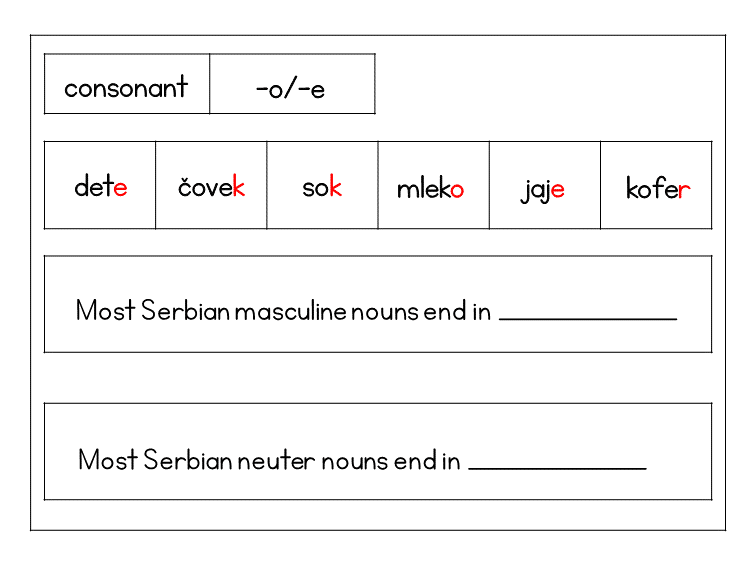
Serbian Genitive Case: Masculine and neuter nouns

Answer keys: masculine nouns: čovek, sok, kofer; neuter nouns: dete, mleko, jaje

Most Serbian masculine nouns end in a consonant.

Most Serbian neuter nouns end in -e or- o.

Here’s an example of one masculine noun in the genitive singular:
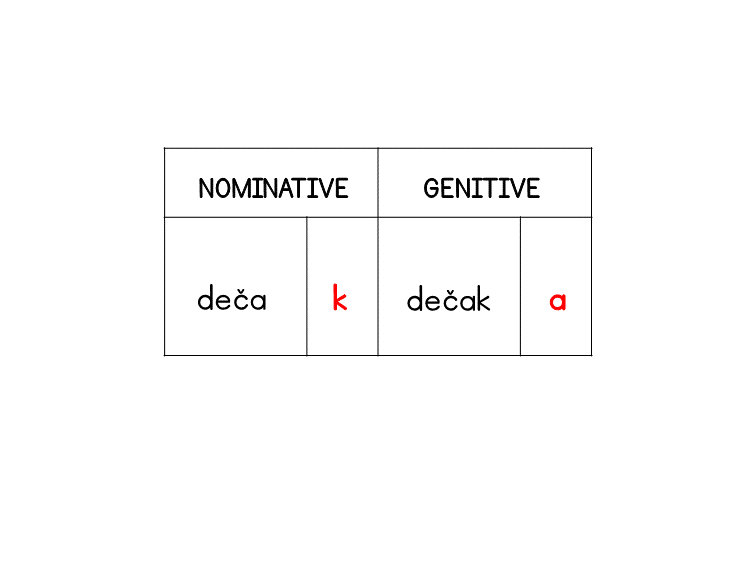
Serbian genitive example: dečak (nominative) changes to dečaka (genitive)

Take a look at the pattern. Simple! Right?
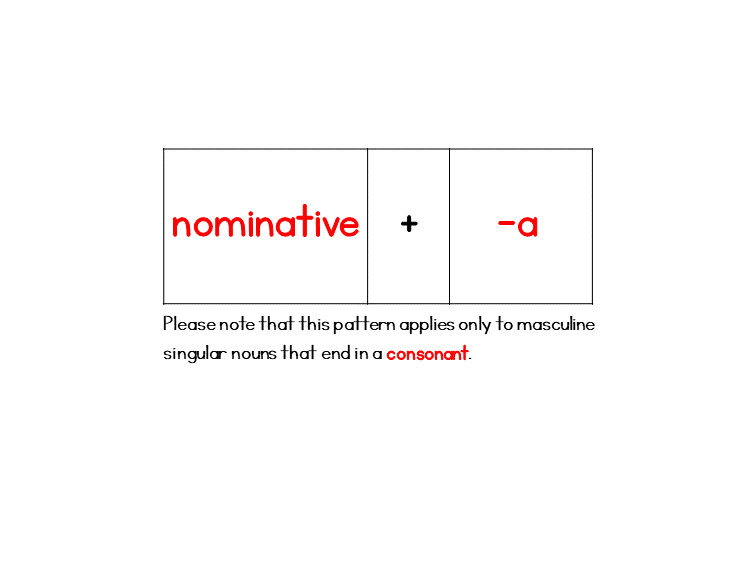
Serbian genitive singular pattern for masculine nouns ending in-a, which change to nominative+-a

Singular Neuter Nouns in the Genitive

Before we move on to the pattern for neuter nouns, grab a pen and a notebook and write down all the examples and rules we’ve learned so far.

When you are learning grammar, it’s important to stay organized. And what better way to do that than to keep everything in one place?

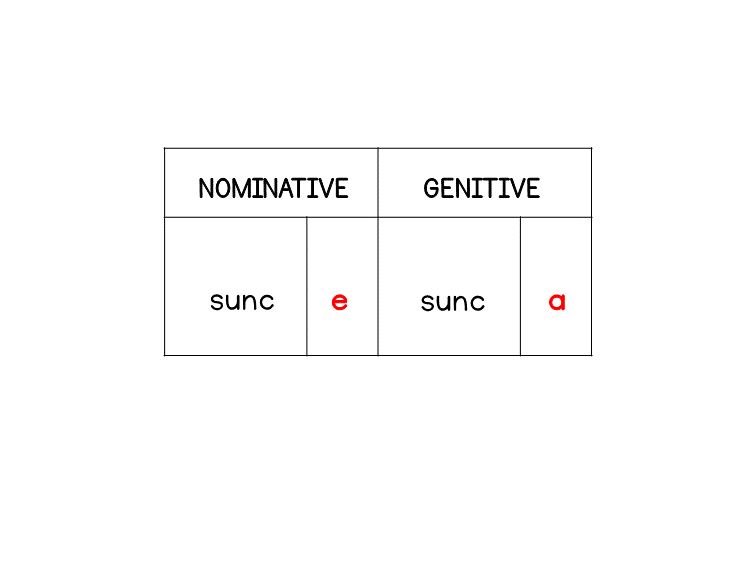
Are you ready for the last pattern? Here it goes. Read the examples below, and pay attention to the endings in the nominative and genitive.
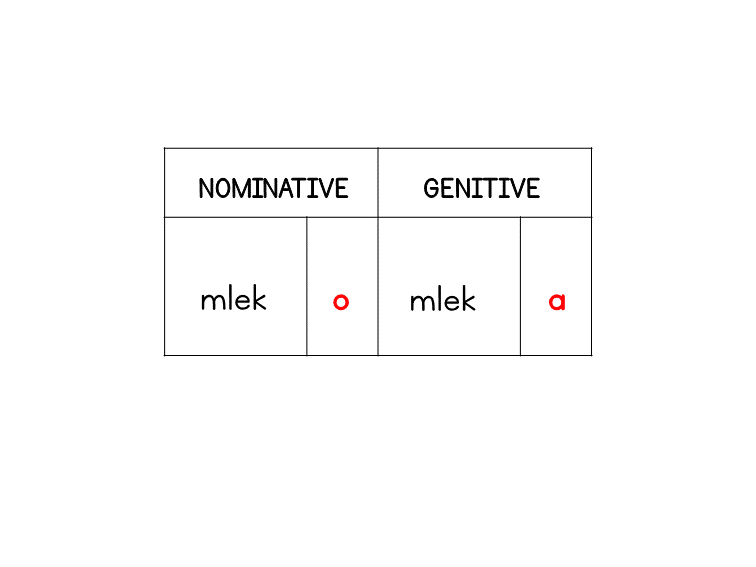
Serbian genitive example: mleko (nominative) changes to mleka (genitive)
Serbian genitive example: sunce (nominative) changes to sunca (genitive)

And the pattern is..

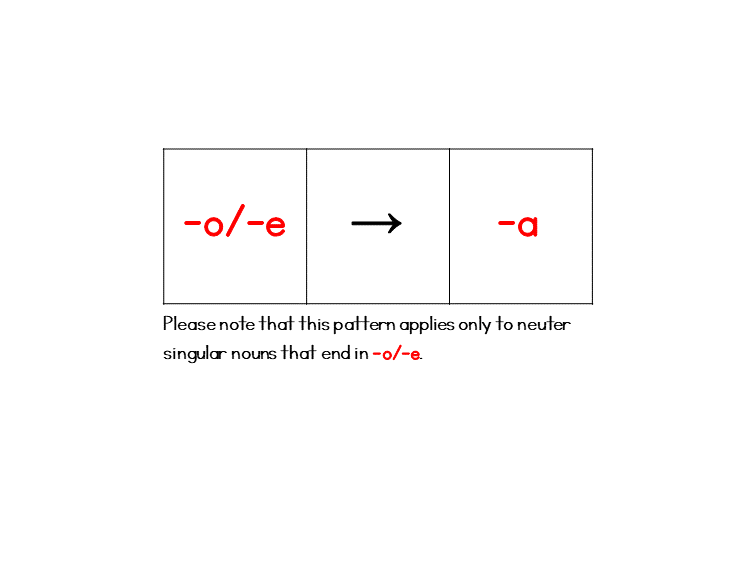
Serbian genitive singular pattern for neuter nouns ending in-o or -e, which change to nominative+-a

It’s time to put the patterns into practice!

Now that we’ve covered the masculine, feminine, and neuter patterns separately, let’s put the patterns together and see what we’ve learned.

It’s much easier when you take one puzzle piece at a time. But what happens when you have to review all three genders together, especially when you add the plural form for all three? Here are some useful tips to help you review all three genders without feeling overwhelmed.

TIP 1: Look at the ending of each noun. Does it end in a consonant, -a, -o, or -e? Then identify its gender: masculine, feminine, or neuter.
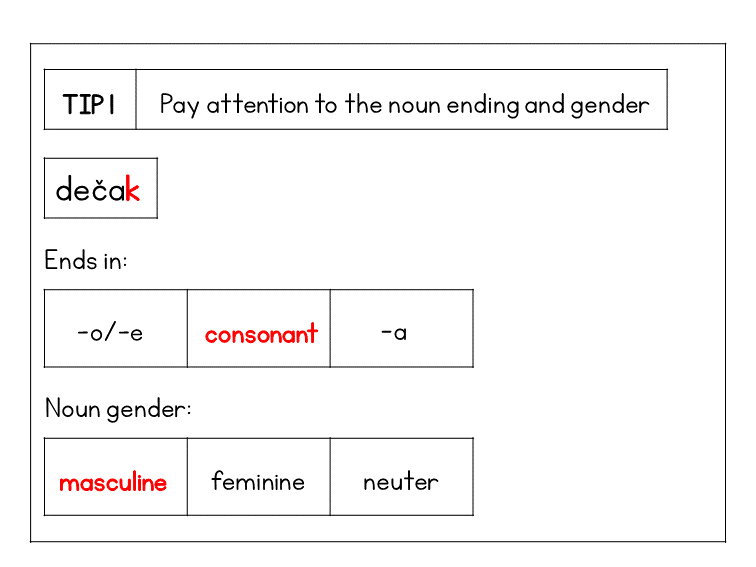
Tip1 for froming the serbian genitive singular: pay attention to the nouns gender and ending

TIP 2: Review the patterns and examples for all three genders.

Take your time to go over the patterns and examples before moving on to the next step.
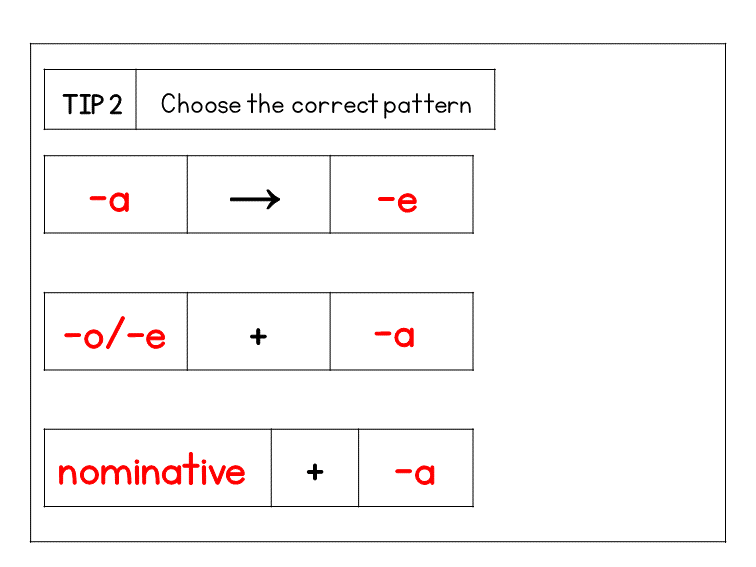
Answer key: nominative+-a

TIP 3: Write the genitive singular form

Now it’s time to put everything together! Look at each noun and write its genitive singular form.
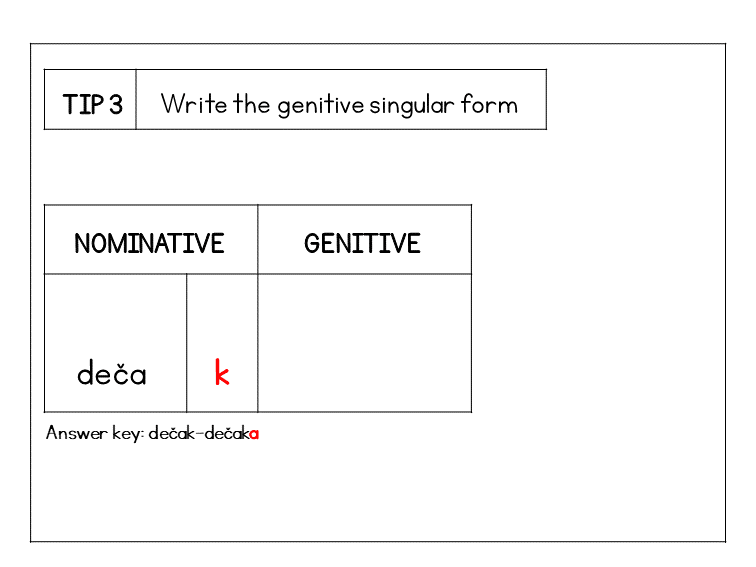
Tip3 for froming the serbian genitive singular: write the noun in the genitive case singular

We’ve covered the rules, patterns, and examples. What is the next step? Practice, practice. practice!
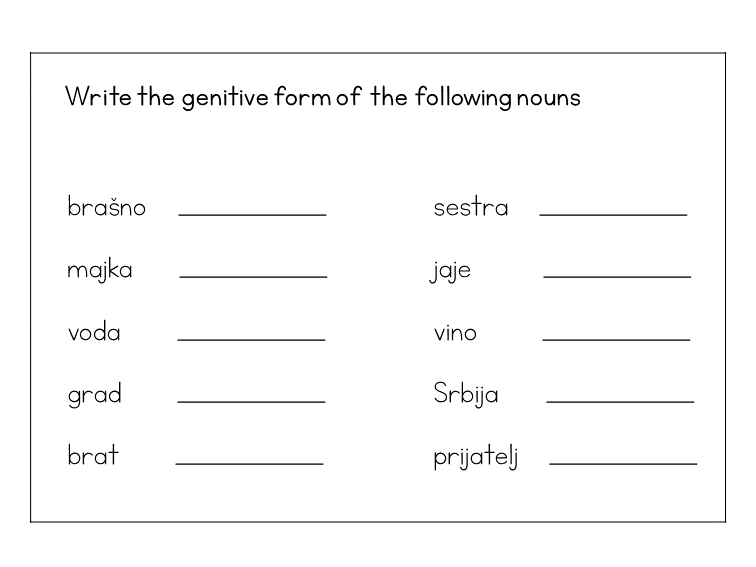
Exercise: change Serbian masculine, feminine, neuter nouns into genitive singular form

Answer keys: brašna, majke, vode, grada, brata, sestre, jaja, vina, Srbije, prijatelja;

Students often think the genitive is one of the most challenging Serbian cases because it has so many different uses. Let’s be honest: learning the Serbian cases is not a piece of cake! So, what can we do to make it easier? I have a solution. Just follow these three simple steps.

1. First, learn step by step.

2. Then, pay attention to the examples.

3. Practice, practice, practice!

Now, let’s take a look at the different uses of the genitive.

The Use of Genitive-POSSESSION

We use the genitive case to express possession and show who something belongs to. In the example below, the noun majka changes to majke in the genitive case.
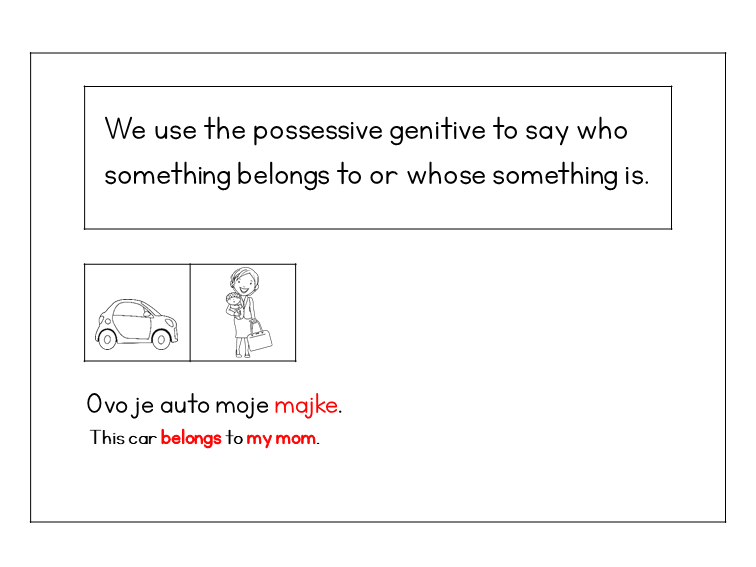
Serbian genitive case used to express possession, with a example showing what something belongs to

I know what you’re thinking: How will I memorize all the rules, uses, and patterns? Easy!

TIP 1: Write down the most important parts of this post in your notebook

TIP2: Read the nouns and identify the patterns

TIP 3: And here comes the most important tip: PRACTICE!

Once you have mastered the rules and patterns, it’s showtime!

This is the moment to apply everything you have learned and use grammar to build sentences you can use in real-life situations.

The Use of Genitive-PARTITIVE

We use the genitive case when talking about quantities and parts of something.
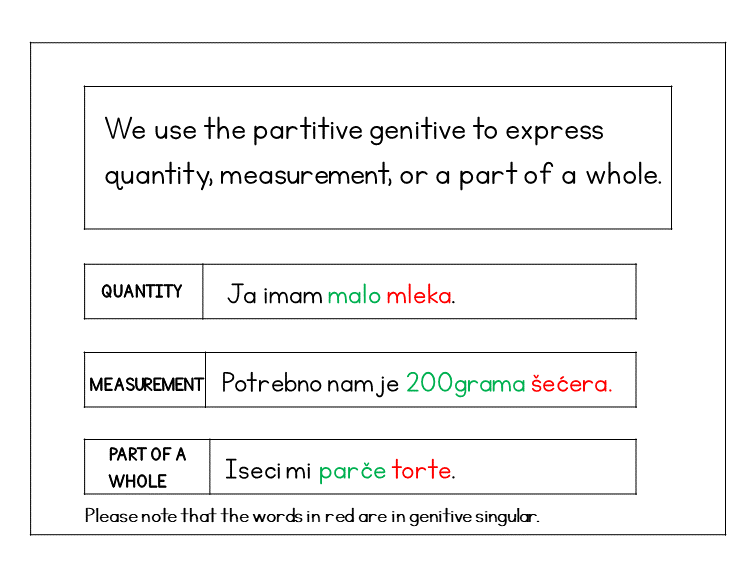
Definition of the Serbian genitive case used to express quantity,and maseuremen , including a part of a whole

The Use of Genitive-ABLATIVE

We use the genitive case to express movement away from something, as well as origin or source.
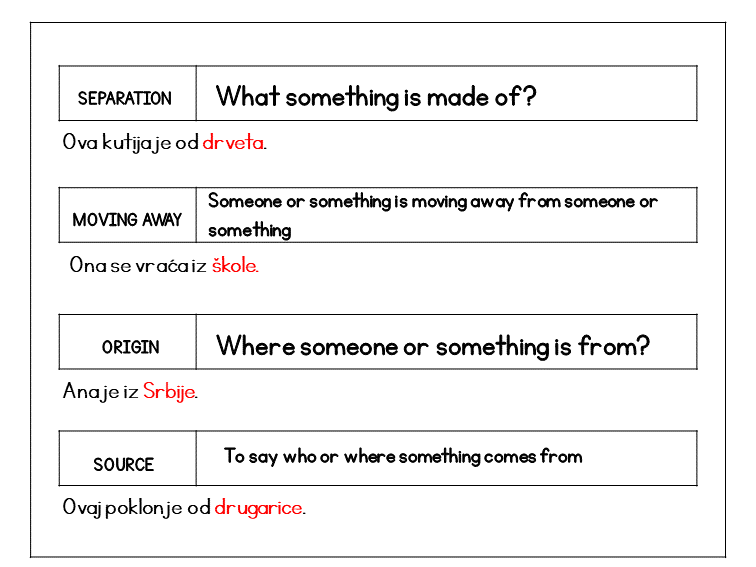
Definition of the Serbian genitive case used to express separation, movment away from something, and sourceor origin, with definitions and examples

Let’s practice!

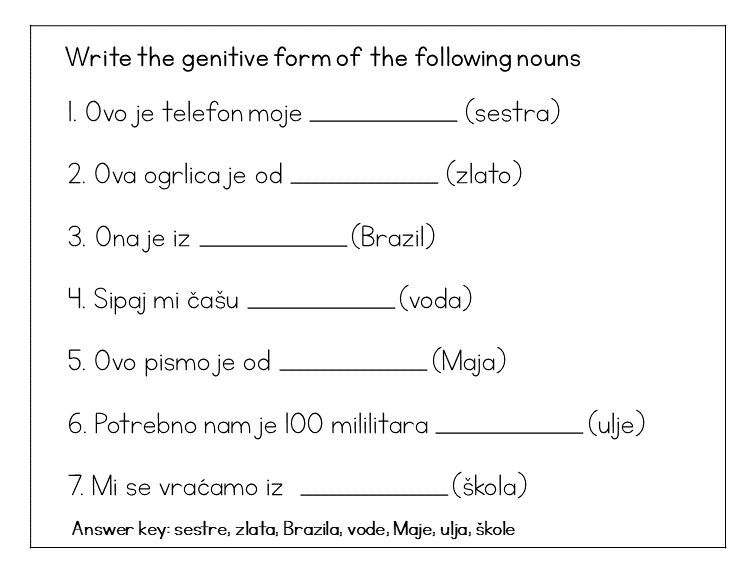
Exercise: practice different uses of the Serbian genitive case by completing sentences

Serbian Genitive Case Plural Form

Here comes the last, but certainly not the least important, puzzle piece: the genitive plural form of Serbian nouns!

Plural Masculine Nouns in the Genitive

Serbian masculine nouns follow different patterns when forming the genitive plural.

Pattern 1

Before we introduce the first pattern, take a look at the example below.
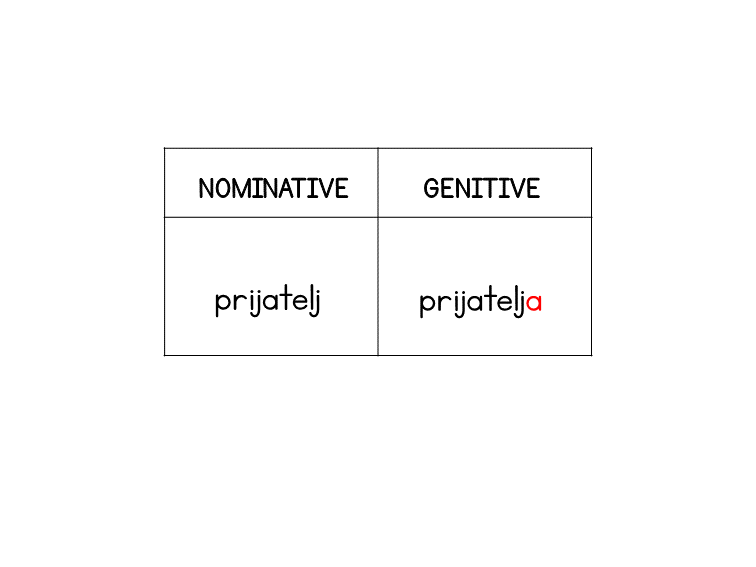
Serbian genitive plural example: prijatelj (nominative singular) changes to prijatelja (genitive plural)

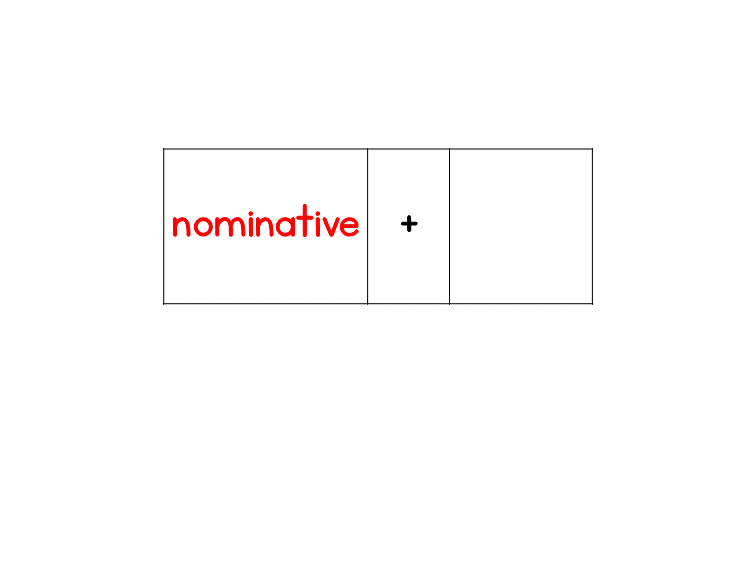
Now complete the pattern!

Serbian genitive plural pattern for masculine nouns: add -a to the nominative singular form to form the genitive plural

Answer key: nominative+-a

Some masculine nouns form the genitive plural by adding the ending –a.

Are you ready for the second pattern?

Pattern 2

Take a closer look at the example below.
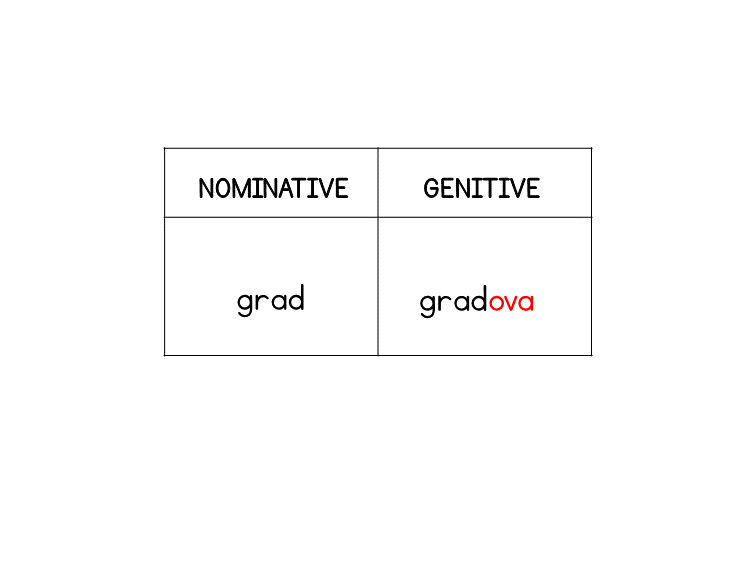
Serbian genitive plural example: grad (nominative singular) changes to gradova (genitive plural)

Complete the pattern.

Serbian genitive plural pattern for masculine nouns: add -ova to the nominative singular form to form the genitive plural

Answer key: nominative+-ova

Practice, practice, practice!
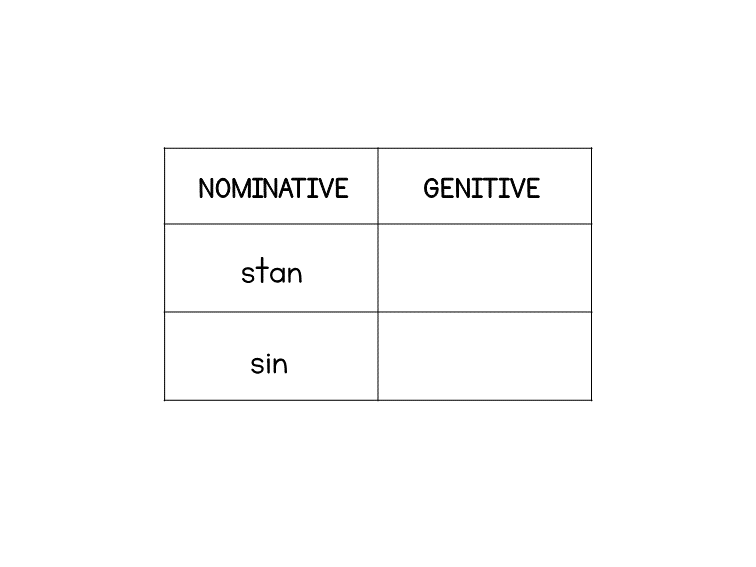
Exercise: write the genitive plural form of the nouns

Answer keys: stanova, sinova

Pattern 3

Take a closer look at the example and the pattern below.
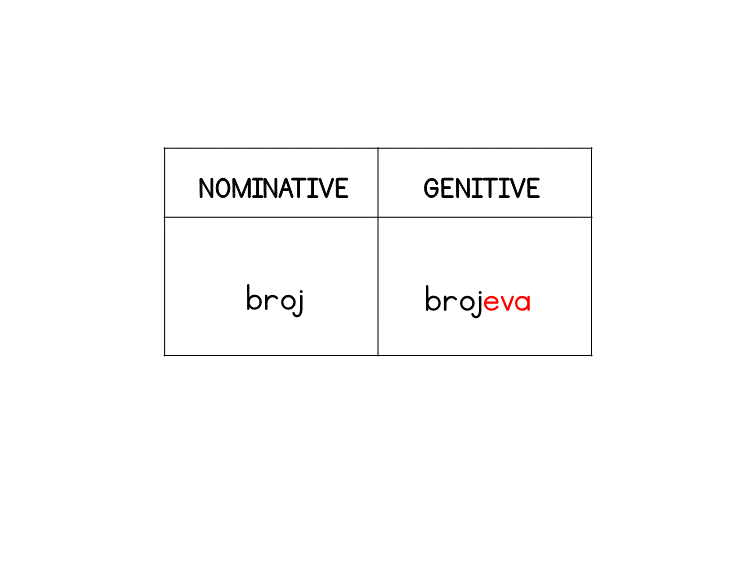
Serbian genitive plural example: broj (nominative singular) changes to brojeva (genitive plural)
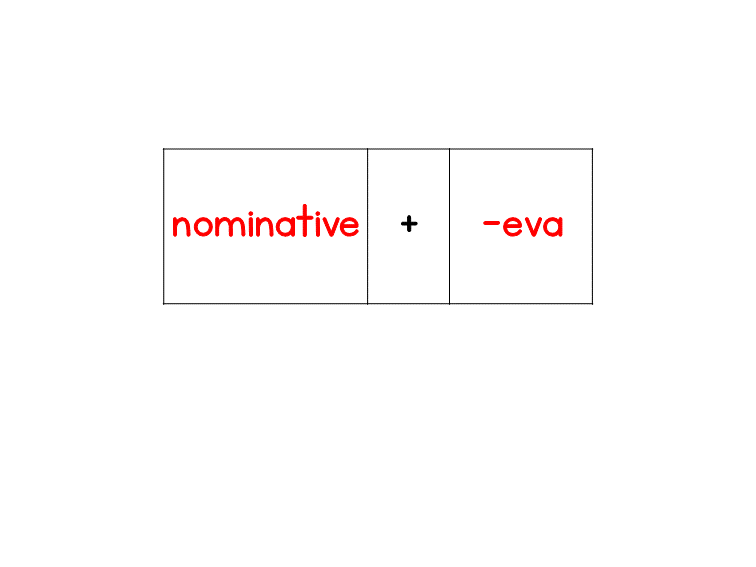
Serbian genitive plural pattern for masculine nouns: add -eva to the nominative singular form to form the genitive plural

Please note that these are the most common patterns used to form the genitive plural of masculine nouns.

Plural Feminine Nouns in the Genitive

What if I told you that you don’t have to learn the ending for some feminine nouns in the Serbian genitive plural?

Yes, you heard that right!

Some Serbian feminine nouns that end in –a have the same form in the nominative singular and genitive plural. Let’s check out one example together!
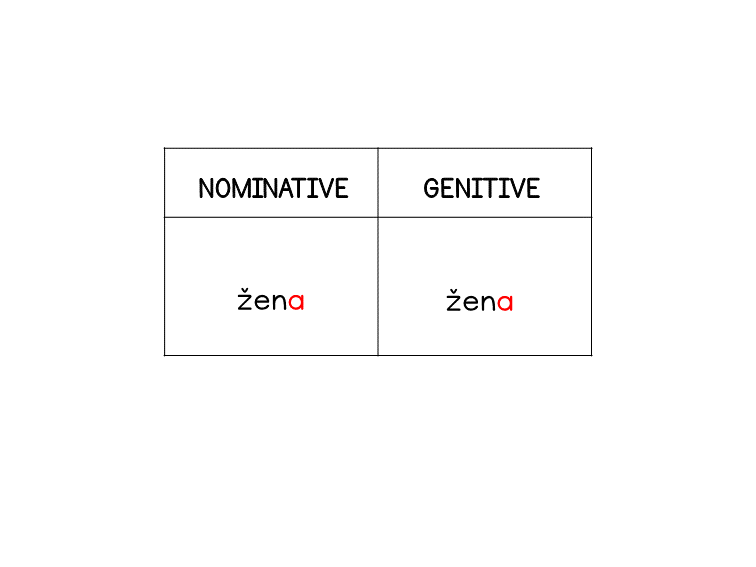
Serbian genitive plural example: žena (nominative singular) changes to žena (genitive plural)

The noun žena has the same form in the nominative singular and genitive plural.

Plural Neuter Nouns in the Genitive

As we mentioned before, most neuter nouns in Serbian end in –o or –e. But what about the plural neuter nouns in the genitive?

The noun selo ends in –o in nominative singular ends and in the genitive plural it ends in –a.
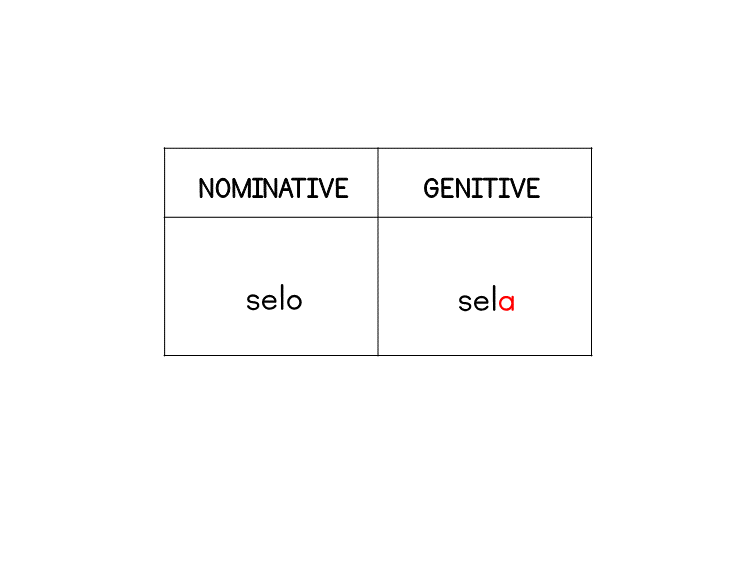
Serbian genitive plural example: selo (nominative singular) changes to sela (genitive plural)

Grab a piece of paper and write down the pattern.
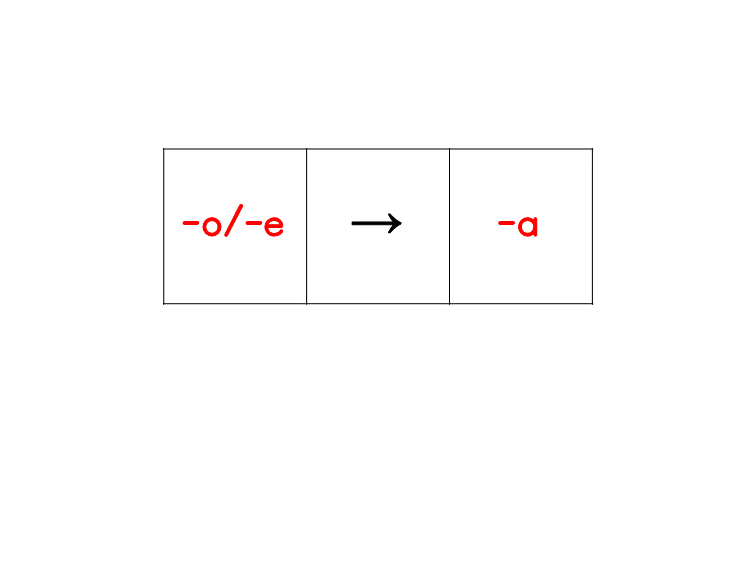
Serbian genitive plural pattern for neuter nouns: -o or-e cnages to -a

Plural masculine nouns. Check. Plural feminine nouns. Check. Plural neuter nouns. Check. Now that we’ve reviewed the patterns, you are all set for the next step. Practice.
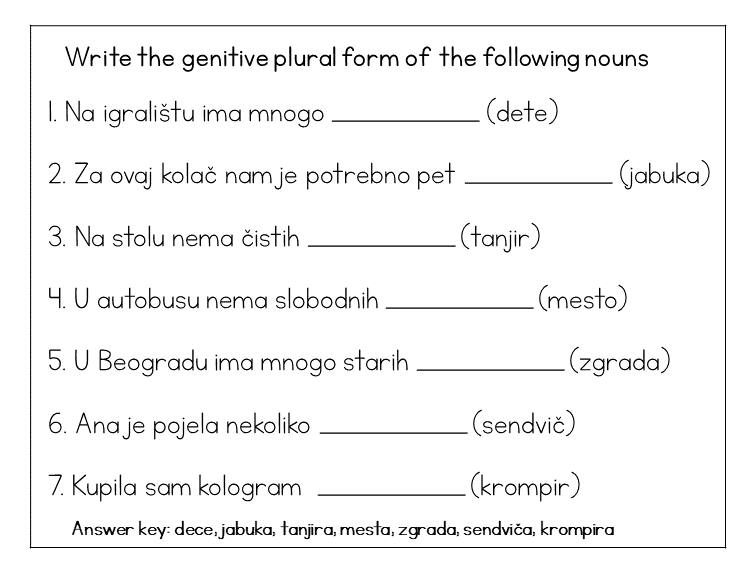
Exercise: practice genitive plural form

What should I do next? Take a break! Turn off your computer and go for a walk. Just don’t think about the Serbian genitive case for a while!

But before you do that, I encourage you to check out my Serbian Genitive Set and save the link so you can easily find it whenever you need more practice.
Serbian Nominative and Accusative Cases: A Step-by-Step Guide

Serbian Nominative and Accusative Cases: A Step-by-Step Guide

Are you starting to learn the Serbian nominative and accusative cases? Seven cases, three genders, different endings, singular and plural forms. Do you feel like a child with so many puzzle pieces? Not sure where to start? Don’t worry. I will guide you every step of the way.

Nominative Case Usage

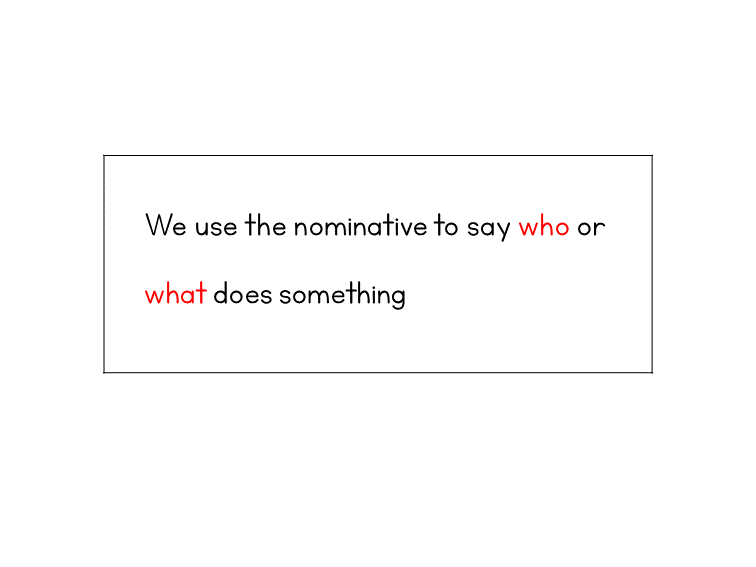
Time to introduce the first puzzle piece: the nominative case. Are you ready? Let’s dive in.

Grammar explanation of the Serbian nominative case, used to identify who or what performs an action in a sentence.

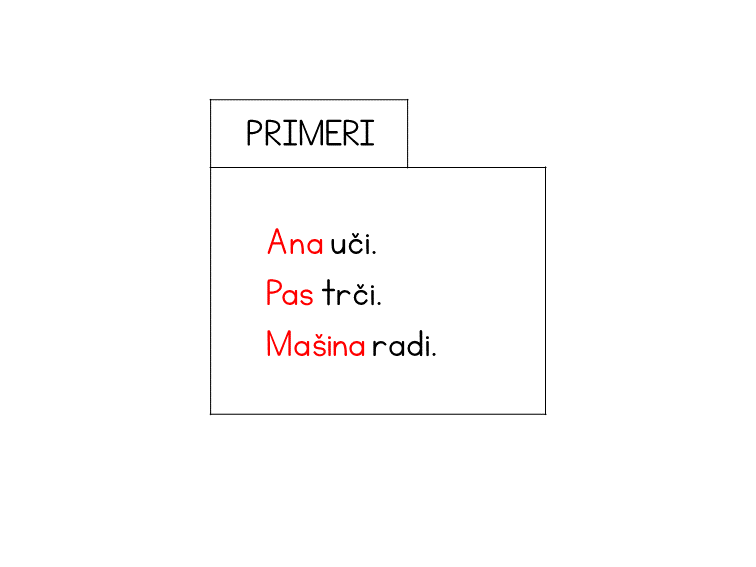
Let’s go through some examples together. Please note that nouns in red are in the nominative.

Examples of the Serbian nominative case using the sentences “Ana uči,” “Pas trči,” and “Mašina radi”

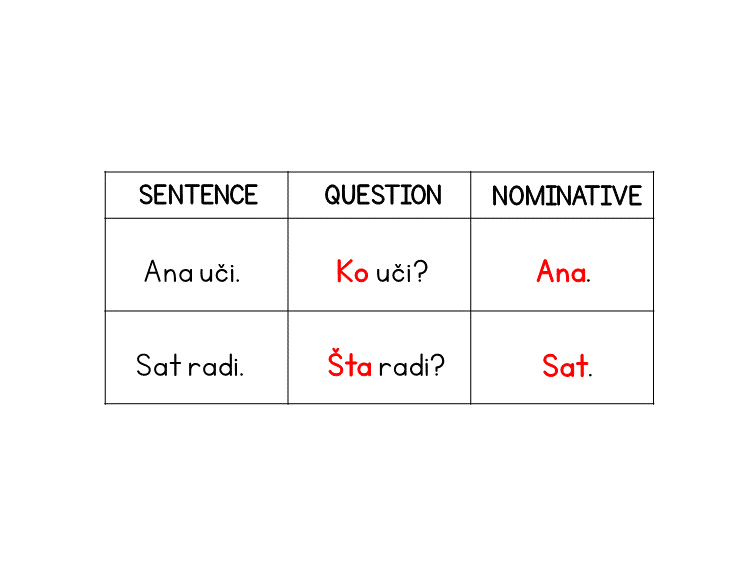
Now, let’s check out the table below:

  • Read the sentence (Ana uči.)
  • Read the question and pay attention to the question word. (Ko uči?)
  • Identify the nominative (Ana.)

A three-column table illustrating the Serbian nominative case. The columns show example sentences, the questions “Ko uči?” and “Šta radi?”, and the nominative answers “Ana” and “Sat.”

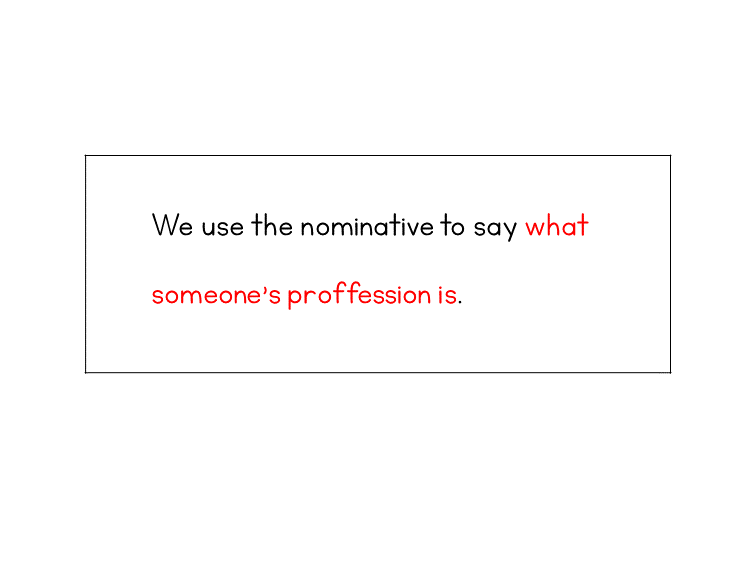
Here is one more way to use the nominative:

Grammar explanation of the Serbian nominative case, showing that it is used to describe someone's profession or occupation.

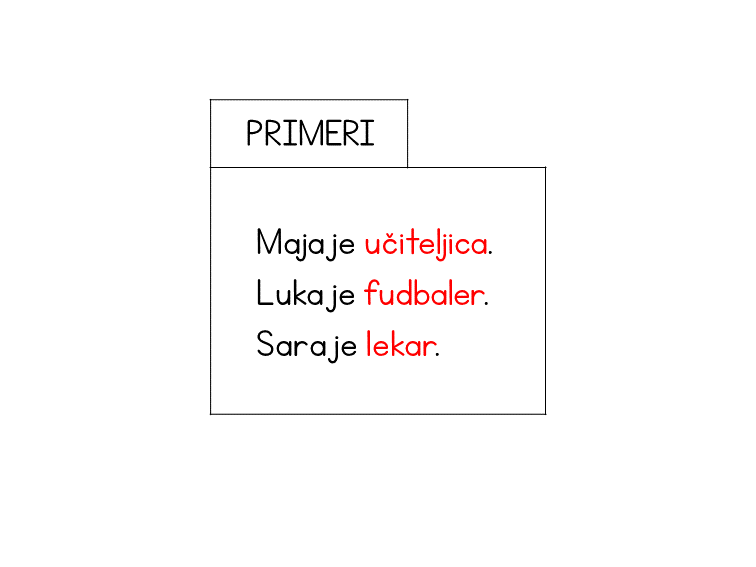
What is the best way to memorize the rules? The answer is simple: examples!

Examples of the Serbian nominative case showing professions: “Maja je učiteljica,” “Luka je fudbaler,” and “Sara je lekar.”

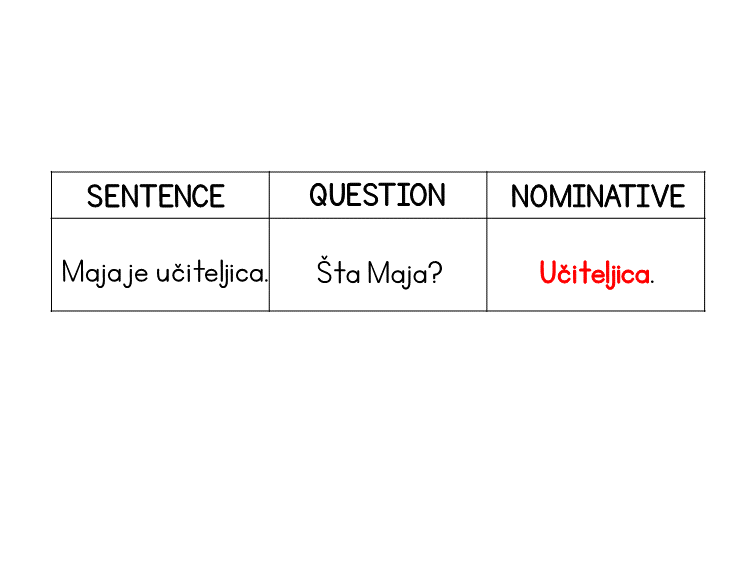
You’ve read the rules and examples but still feel confused? Don’t worry! Take a look at the table below.

A three-column table illustrating the Serbian nominative case with the sentence “Maja je učiteljica,” the question “Šta je Maja?”, and the nominative answer “učiteljica.”
  • Read the sentence (Maja je učiteljica.)
  • Read the question and pay attention to the question word. (Šta je Maja?)
  • Identify the nominative (Učiteljica)

We can all learn the rules. Piece of cake! The tricky part is knowing how to apply them. I’ve got some great news! Just follow the 4 steps:

  1. Memorize the rules
  2. Read the examples
  3. Identify the rules in words/sentences
  4. And finally, practice, practice, practice

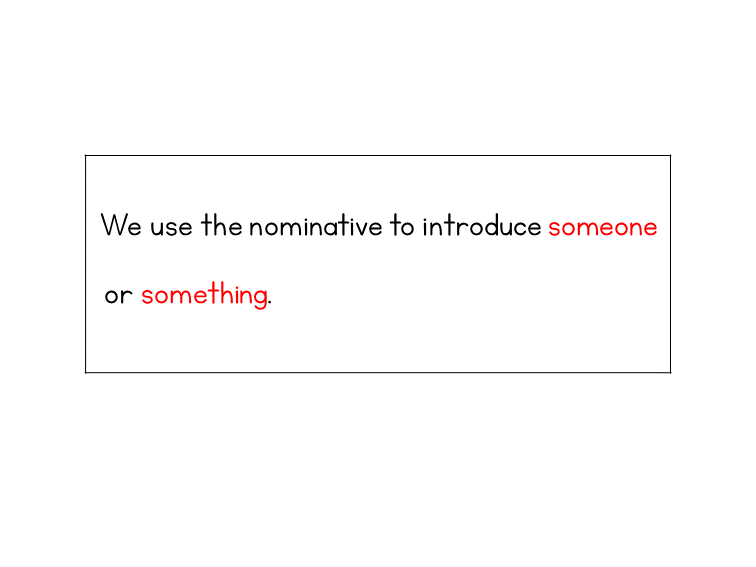
Let’s introduce one more way we can use the nominative:

STEP 1


Grammar explanation of the Serbian nominative case, showing that it is used to introduce someone or something.

STEP 2

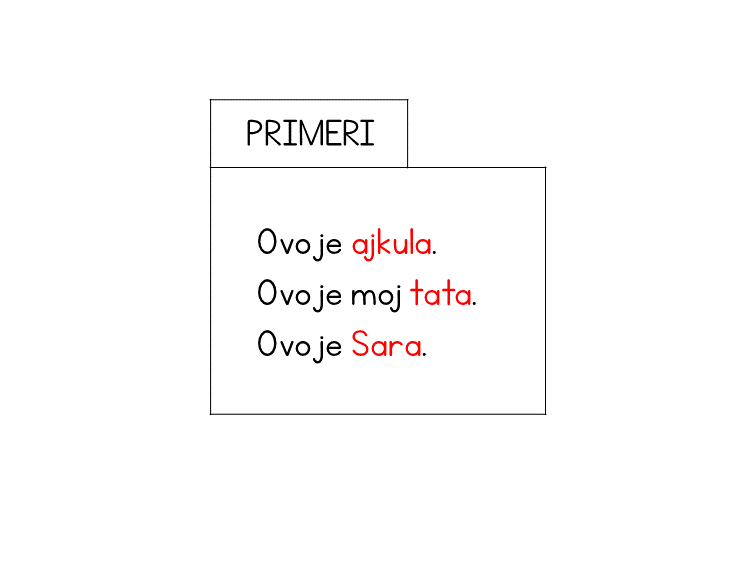
Examples of the Serbian nominative case used to introduce people or things: “Ово је мој тата,” “Ово је ајкула,” and “Ово је Сара.”

STEP 3

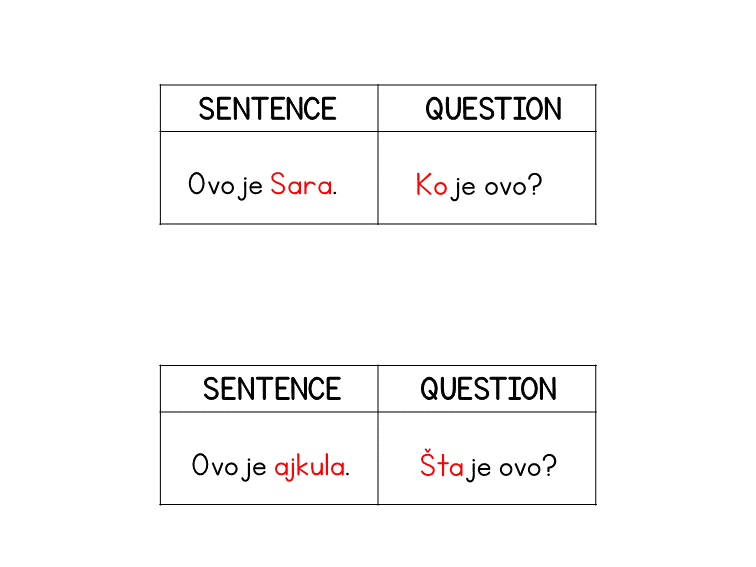
Two tables illustrating the Serbian nominative case when introducing people and things. The first shows “Ovo je Sara” with the question “Ko je ovo?”, and the second shows “Ovo je ajkula” with the question “Šta je ovo?”

STEP 4

Let’s check what you’ve learned so far. Take a few minutes to review the rules, or grab a pen and a notebook and take notes as you read the post. It’s time to practice.

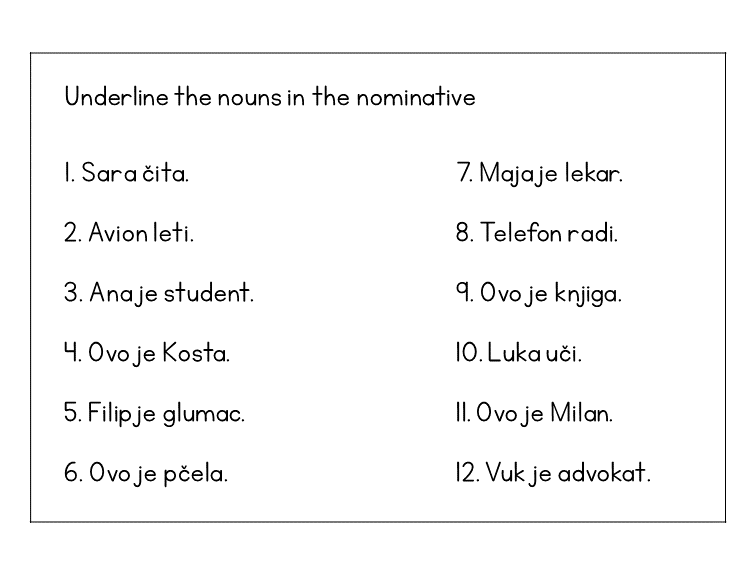
Serbian nominative case exercise in which learners identify and underline the nominative forms in the given sentences.

Answer keys: Sara, avion, Ana, Kosta, Filip, glumac, pčela, Maja, lekar, telefon, knjiga, Luka, Milan, Vuk, advokat.

Accusative Case

I present to you the next puzzle piece, the accusative case. Most students find learning the Serbian accusative case challenging, but it doesn’t have to be. Today I’ll share with you a few quick tips to help you learn the Serbian cases without being overwhelmed.

1. Learn step-by-step – don’t try to learn everything at once: singular and plural forms, masculine, feminine, neuter gender, exceptions.

2. Learn the rules and patterns.

3. Identify the rules and patterns in examples.

Accusative Case Usage

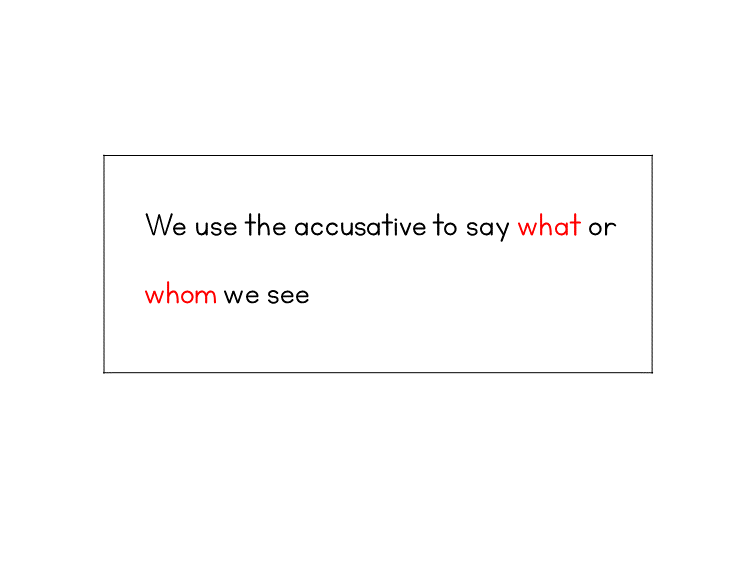
Grammar explanation of the Serbian accusative case, showing that it is used to say what or whom we see.

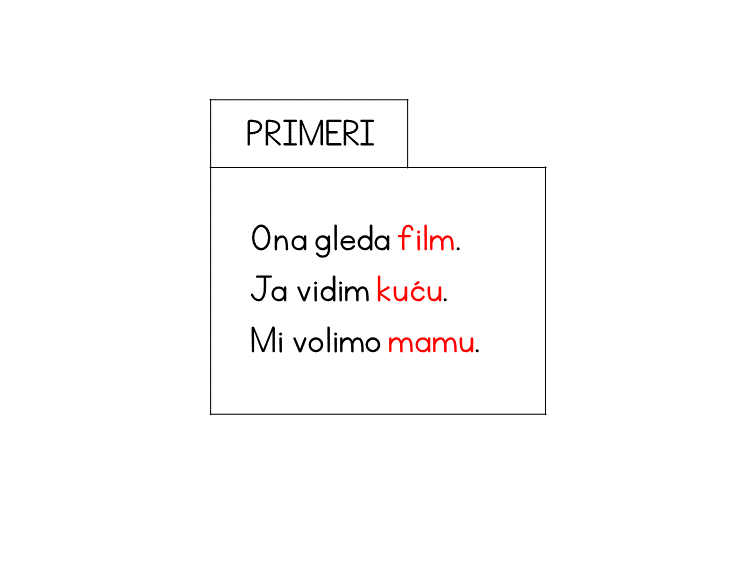
We’ve covered the rules. What comes next? Examples!

Examples of the Serbian accusative case using the sentences “Ona gleda film,” “Ja vidim kuću,” and “Mi volimo mamu,” illustrating how the accusative is used to express what or whom we see.
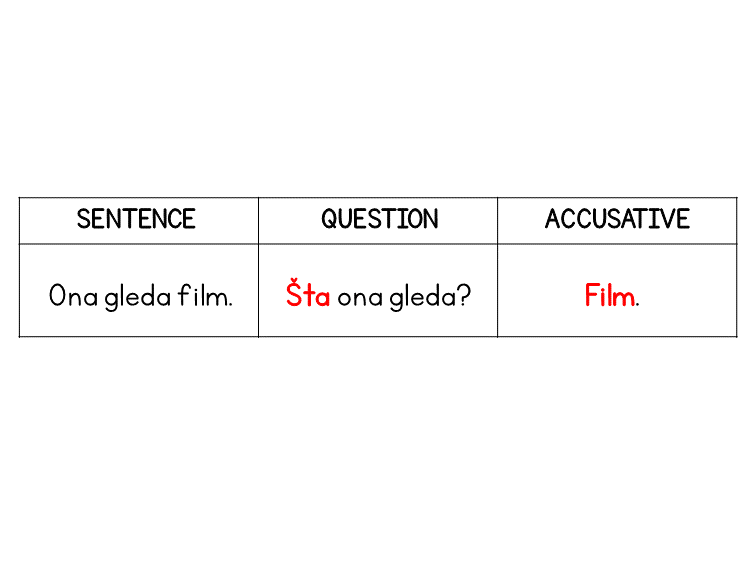
  1. Now, let’s take a look at this sentence. (Ona gleda film.)
  2. Read the question. (Šta ona gleda?)
  3. And the answer is…?

You’re right. Film.

A three-column table illustrating the Serbian accusative case with the sentence “Ona gleda film,” the question “Šta ona gleda?”, and the accusative answer “film.”

Is that nominative or accusative? You’re right again. It’s accusative.

You’re doing great. Just keep going, and soon all the puzzle pieces will fit perfectly.

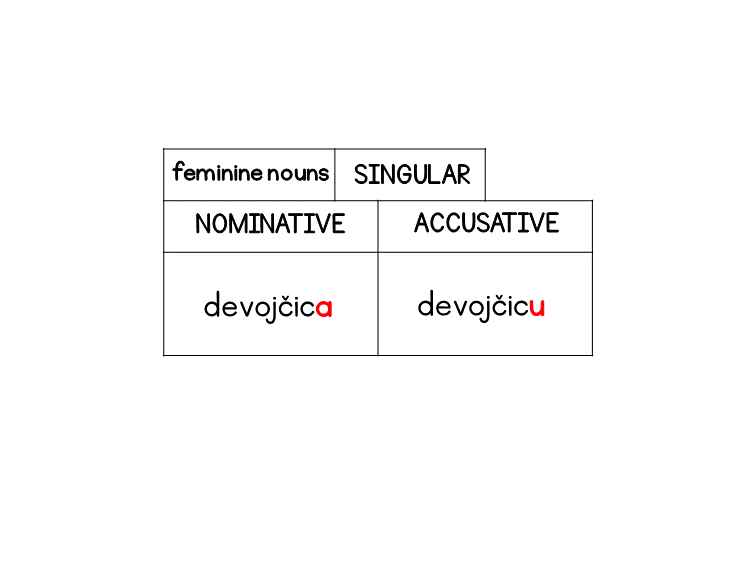
Feminine Nouns Accusative Case

Serbian nouns have three genders: feminine, masculine, and neuter.

Rules, patterns, genders… I know it feels like a lot. Don’t stress about it! Let’s start with feminine nouns.

Now it’s a good time to apply the 4 tips we mentioned earlier.

Tip 1: Learn step-by-step

Tip 2: Check out the table below and identify the pattern. Grab a piece of paper and write down the pattern.

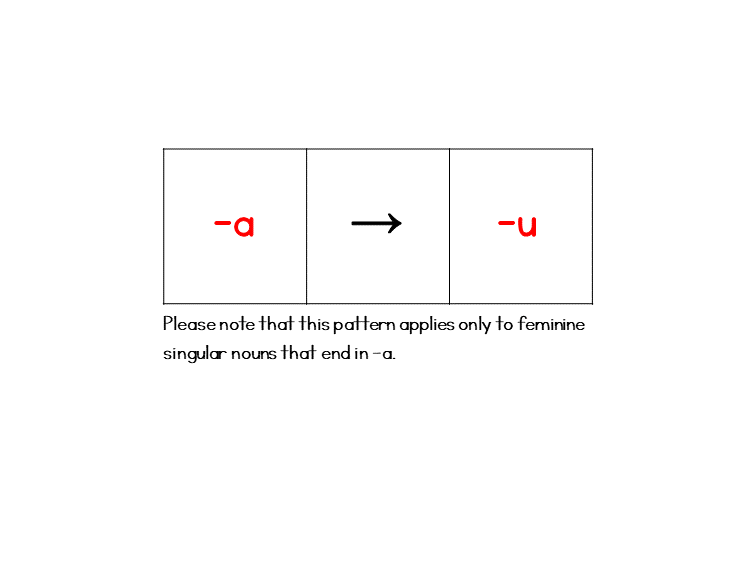
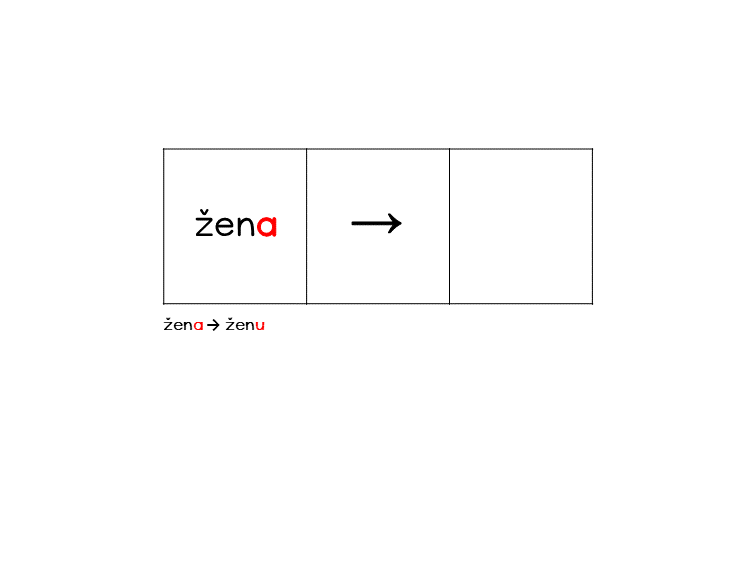
A two-column comparison of Serbian nominative and accusative forms of a feminine noun, showing “devojčica” in the nominative and “devojčicu” in the accusative.

Now, let’s check if your pattern matches the one below:

A visual explanation of the Serbian accusative case, showing the preposition “u” (into) and its use to indicate movement towards or into a place.

Tip 3: Put the noun in the singular accusative case

A visual explanation of the Serbian accusative case, showing the preposition “u” (into) and its use to indicate movement towards or into a place.

The Accusative case doesn’t sound tricky anymore?

Step by step, all the puzzle pieces will slowly come into place!

Neuter Nouns Accusative Case

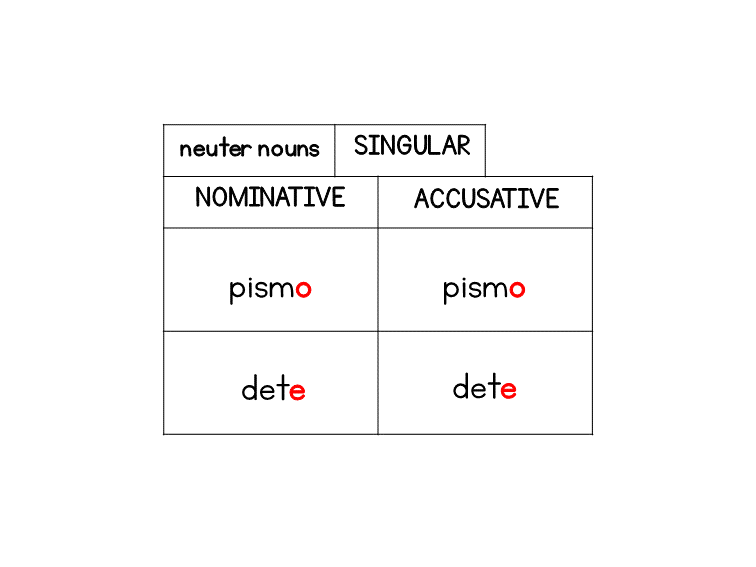
I’ve got some great news! Are you ready? Just take a look at the table below.

A table comparing Serbian neuter nouns in the singular nominative and accusative cases, with the examples “pismo” and “dete,” showing that the forms remain the same in both cases.

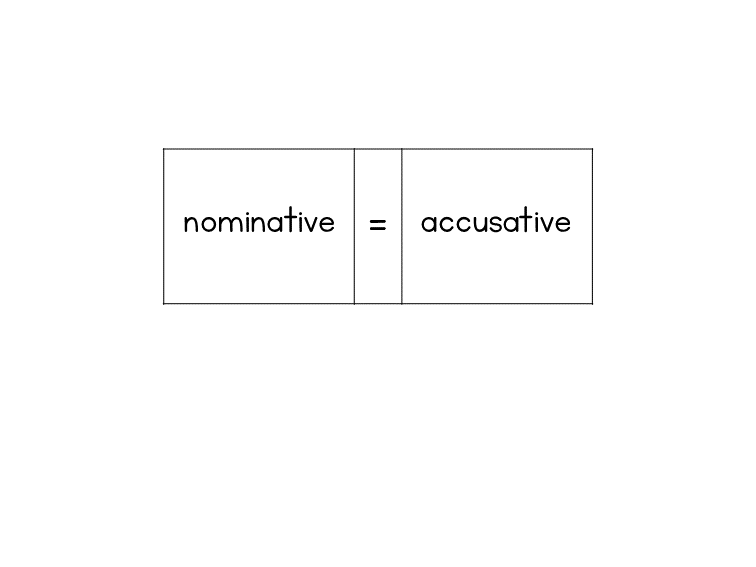
What do you notice? There is no change. Neuter singular nouns have the same form in the nominative and accusative cases.

Grammar visual showing that Serbian neuter nouns have the same form in the singular nominative and accusative cases.

Masculine Nouns Accusative Case

This is where it becomes tricky again. But don’t worry. Take a deep breath, and let’s do this step by step, puzzle piece by puzzle piece.

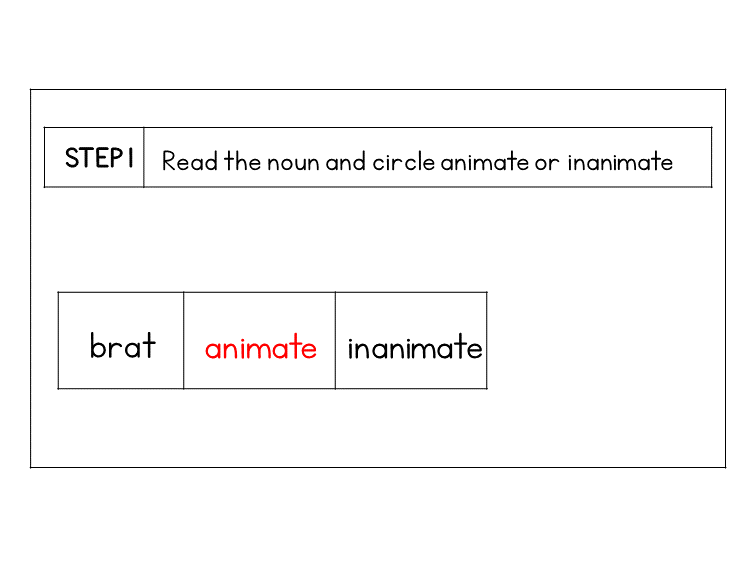
Step 1 of a Serbian accusative case exercise. Students read the noun “brat” (brother), identify whether it refers to an animate or inanimate noun, and choose the correct category.
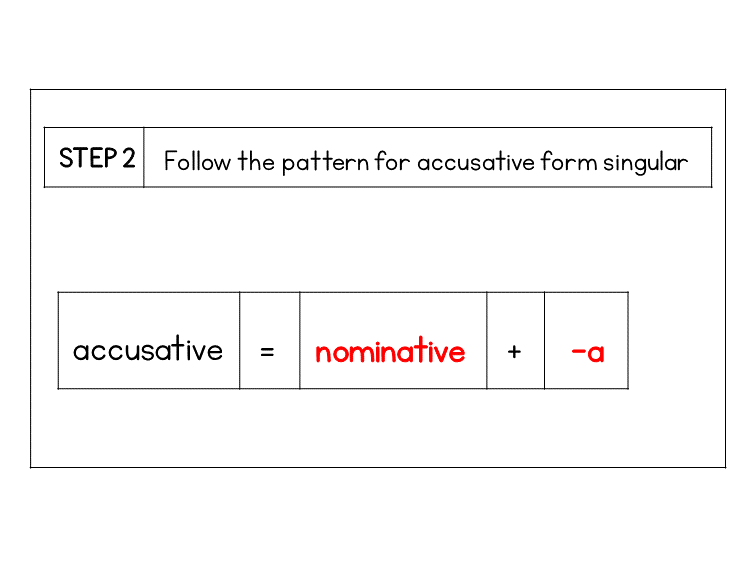
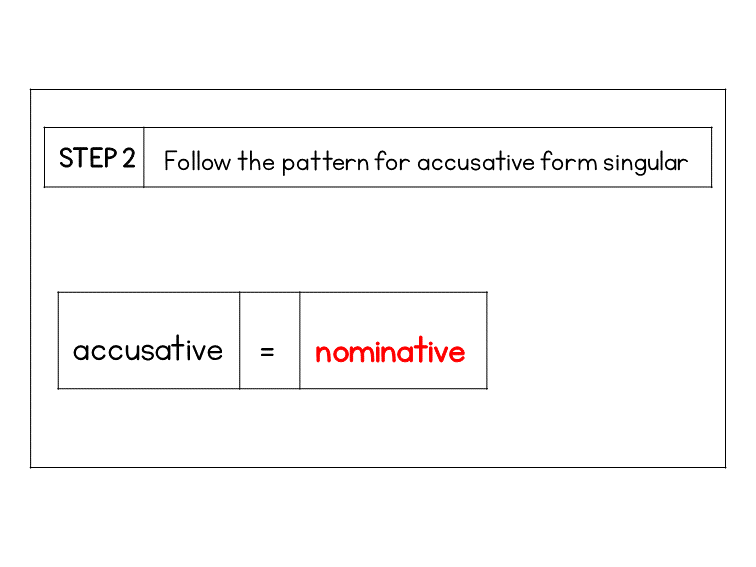
Step 2 of a Serbian accusative case exercise, showing the formation rule for masculine singular animate nouns: accusative = nominative +-a. Students follow the pattern to form the correct accusative case.
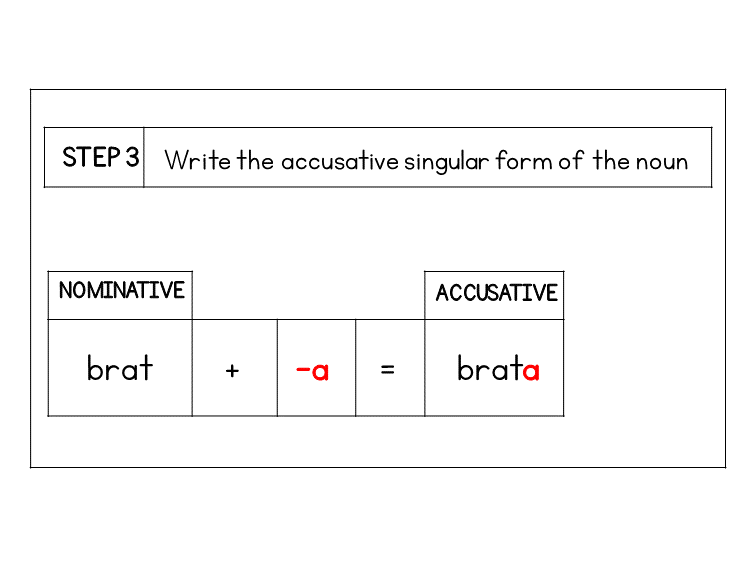
Step 3 of a Serbian accusative case exercise. Students practice forming the accusative singular of masculine animate nouns using the example “brat + A = brata,” changing the nominative form into the accusative form.

Pay attention to STEP 1. This step is super important. If you can identify animate and inanimate nouns, you’ll learn the masculine accusative form in no time.

Here is one more example:

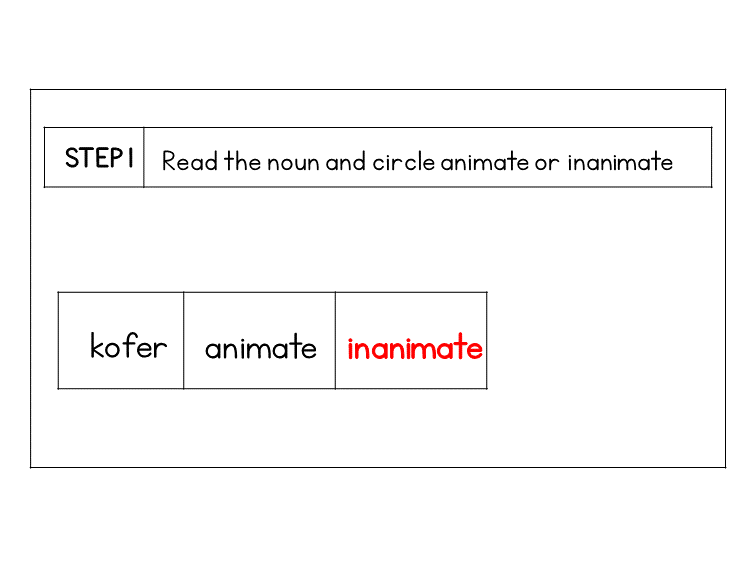
Step 1 of a Serbian accusative case exercise for masculine inanimate nouns. Students read the noun “kofer” (suitcase) aloud and circle whether it is animate or inanimate.
Step 2 of a Serbian accusative case exercise, showing the formation rule for masculine singular inanimate nouns: accusative = nominative. Students follow the pattern to form the correct accusative case.
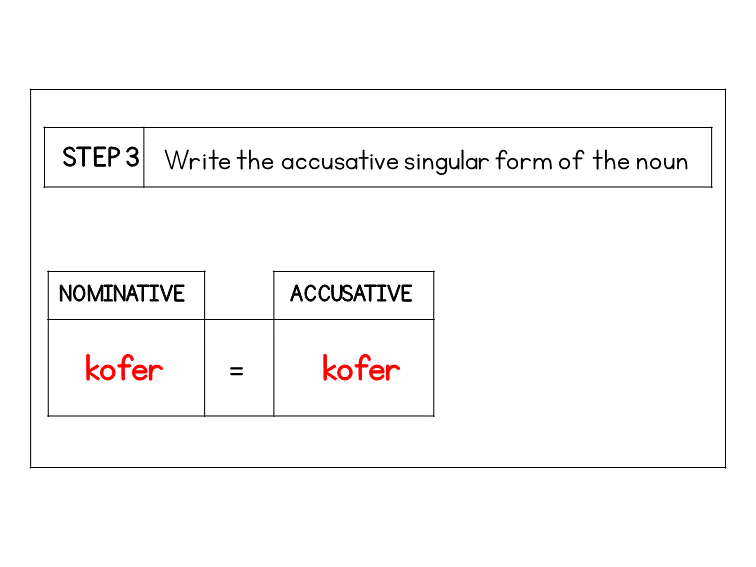
Step 3 of a Serbian accusative case exercise. Students practice forming the accusative singular of masculine inanimate nouns using the example “kofer = kofer,” showing that the nominative and accusative forms are identical

Noun kofer is inanimate. And here’s the good news! Inanimate masculine nouns don’t change in the accusative case.

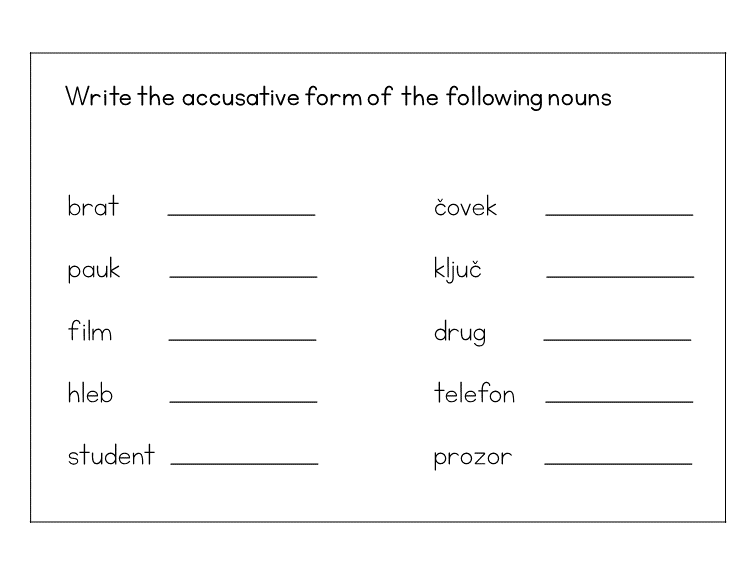
What is the best way to master the grammar of any language? It’s simple! Practice, practice, practice! Next, let’s take a minute to revise the steps for both animate and inanimate nouns before moving on to the following exercise.

Serbian accusative case exercise featuring both animate and inanimate masculine nouns, allowing students to practice identifying the correct accusative forms.

Answer keys: brata, pauka, film, hleb, studenta, čoveka, ključ, druga, telefon, prozor

QUICK TIP: Grab a pen and a notebook and write down the tips, steps, patterns, and don’t forget the examples.

How to identify the accusative and the nominative?

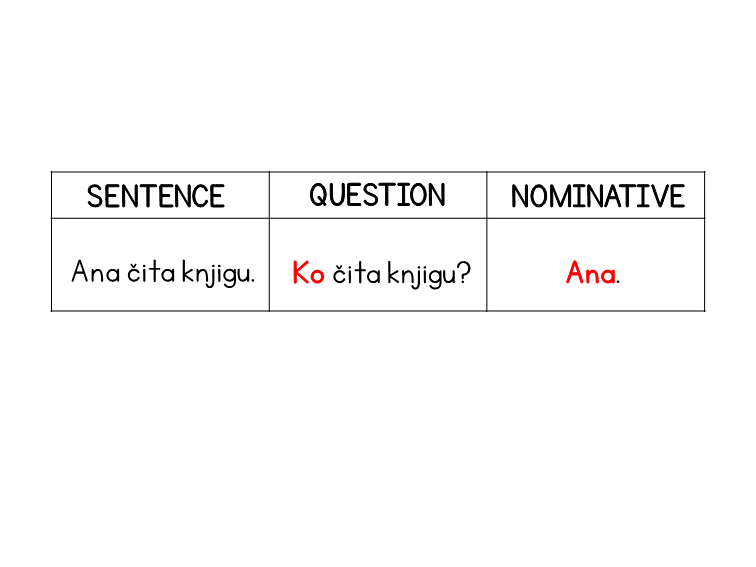
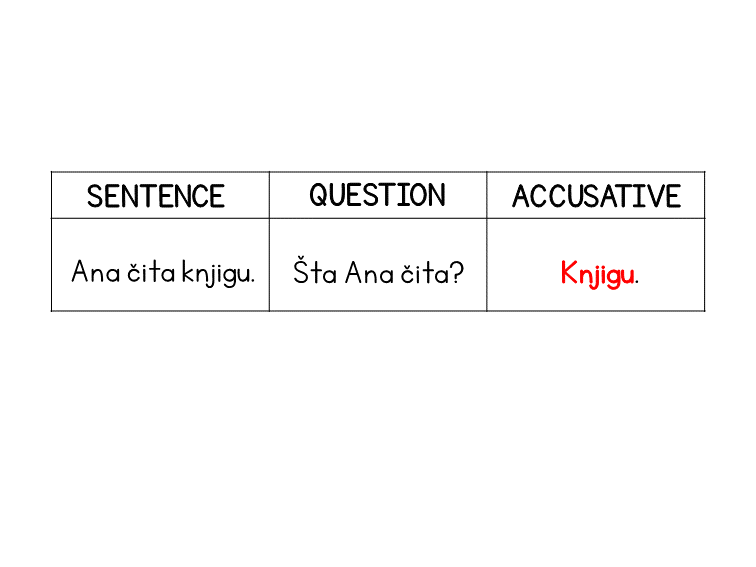
A table comparing the Serbian nominative and accusative cases using the sentence “Ana čita knjigu.” It shows the question “Ko čita knjigu?”, with “Ana” identified as the nominative (subject) and “knjigu” as the accusative (direct object).

Take a look at the first table. Ana čita knjigu. Ko čita knjigu? Ana. What do you notice? Look at the question word ( Ko?) and the answer (Ana). Can you identify the nominative? That’s correct! Ana.


A Serbian accusative case table showing the sentence “Ana čita knjigu,” the question “Šta ona čita?”, and the accusative answer “knjigu,” highlighting the direct object of the sentence.

Now let’s go through the second table. Ana čita knjigu? Šta Ana čita? Knjigu. Can you identify the accusative? You’re right again! Knjigu.

It’s time to … Practice!

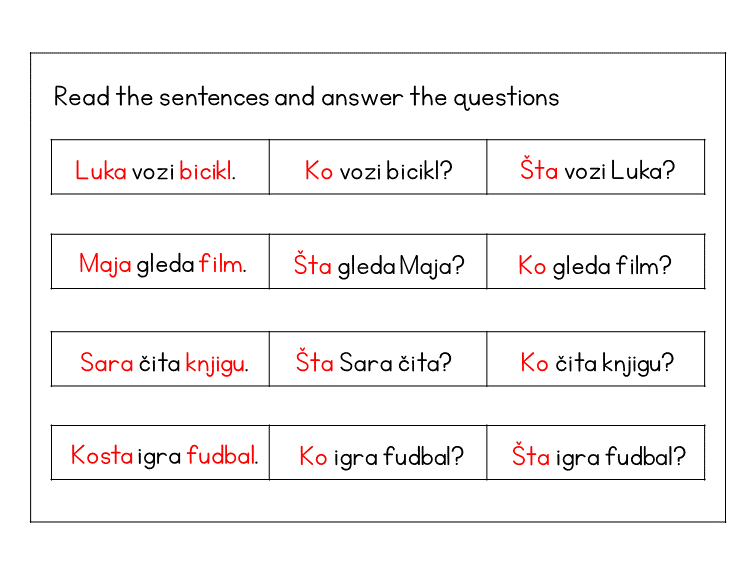
Serbian nominative and accusative case practice. Students read sentences such as “Luka vozi bicikl” and answer questions like “Ko vozi bicikl?” and “Šta vozi Luka?” to identify the subject and direct object in each sentence.
Answer keys: Luka, bicikl; film, Maja; knjigu, Sara; Kosta, fudbal

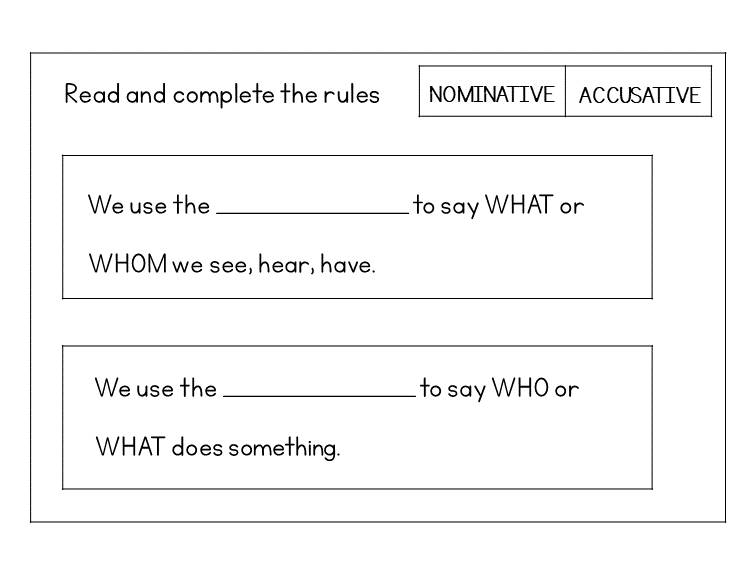
Serbian nominative and accusative grammar exercise in which students read and complete two grammar rules by choosing between nominative and accusative. The definitions describe when each case is used, such as using the accusative to say what or whom we see, hear, or have.

Answer keys: We use the accusative to say what or whom we see, hear, or have. We use the nominative to say who or what does something.

Finally, all the puzzle pieces fit, and we can see the whole picture. The accusative case doesn’t look so scary anymore, right?

But remember, practice makes perfect! If you would like more practice, check out my Serbian Nominative and Accusative Case Worksheets.

Are you ready for the next puzzle? Continue learning with my blog post about the Serbian Genitive Case!

Pinterest
Pinterest
fb-share-icon