When you start reading about the Serbian genitive case, you might think, “I can’t do this!”
I feel you. Three genders, singular and plural forms, and if that isn’t hard enough, the genitive has so many different uses that can make your head spin.
If you’ve read my post about nominative and accusative cases, you know that we’re not going to try to learn everything at once.
Serbian Genitive Case: When Do We Use It?
Do you want to know when to use the genitive case? Just look at the image below.
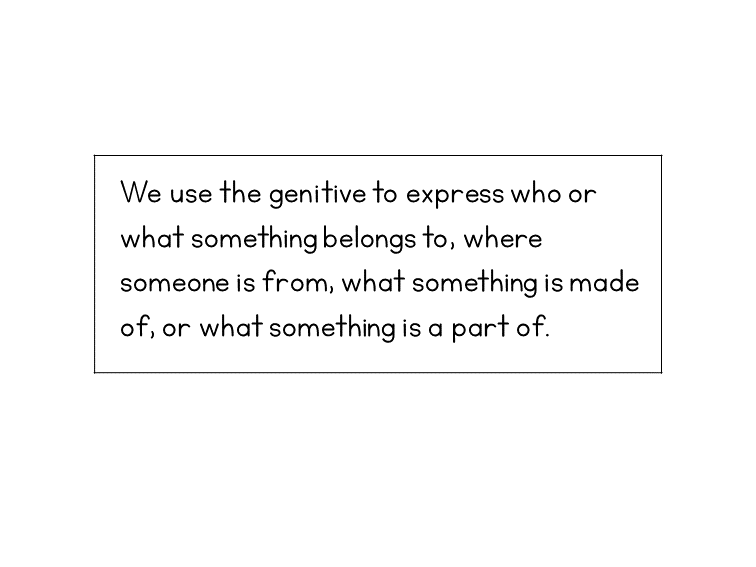
Too much information? Don’t worry! Let’s take a look at some examples.
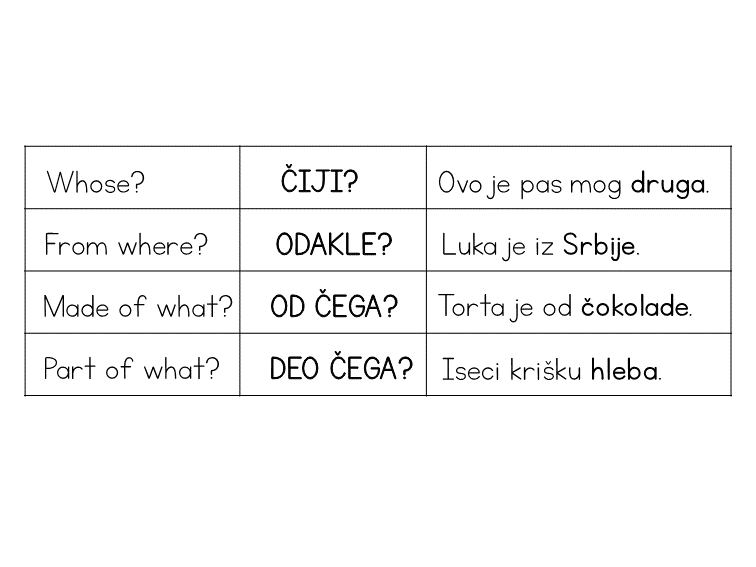
Still confused? With every puzzle piece, it will get easier. I promise.
Serbian Genitive Singular Feminine Form
Before we introduce the genitive singular form, read the following nouns and complete the rule.
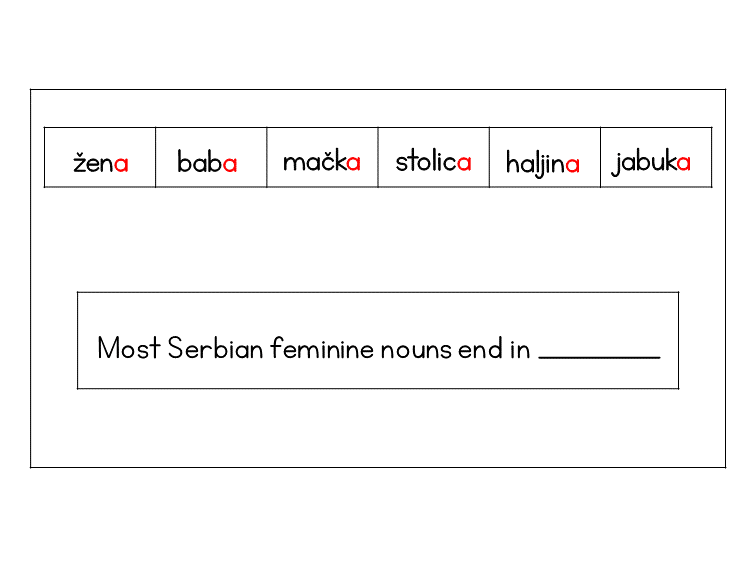
Answer key: Most Serbian feminine nouns end in -a.
What is the best way to learn the Serbian cases? Through examples and patterns. Take a look at the table below.
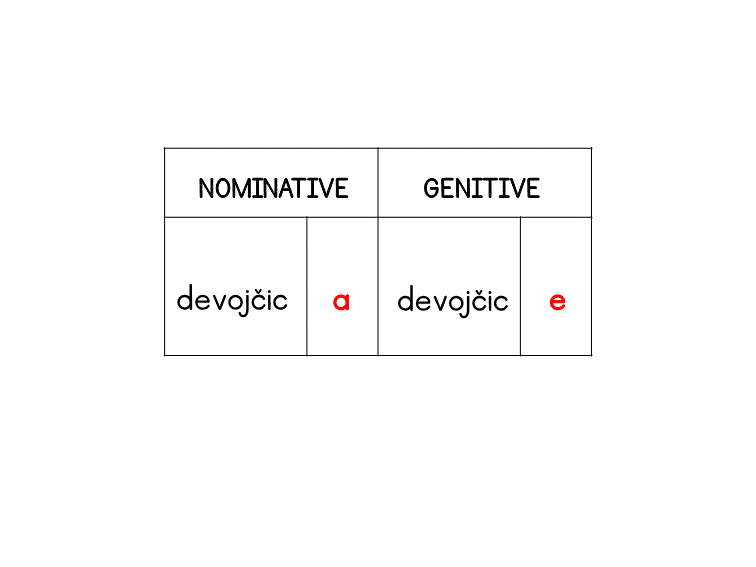
Learning the rules is important, but it’s not enough. The next step is to analyse the examples. What does it mean? Pay attention to the ending of the noun in the nominative and genitive cases. Do you see the pattern?
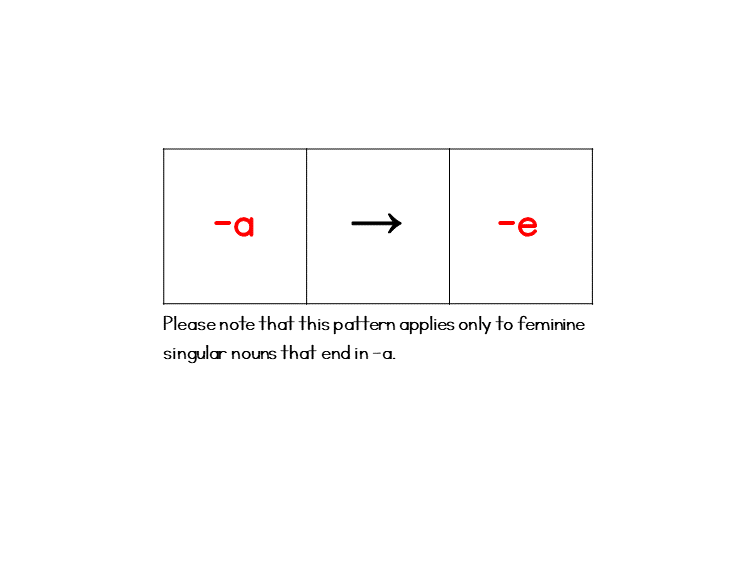
If a feminine noun ends in –a, its genitive singular form usually ends in –e. I told you it would get easier with every step we take!
Singular Masculine Nouns in the Genitive
It’s time for another puzzle piece: masculine and neuter nouns in the genitive singular. But first, let’s complete three tasks:
TASK 1. Circle the masculine nouns and underline the neuter nouns
TASK 2. Look at the nouns from TASK 1 and complete the rules.
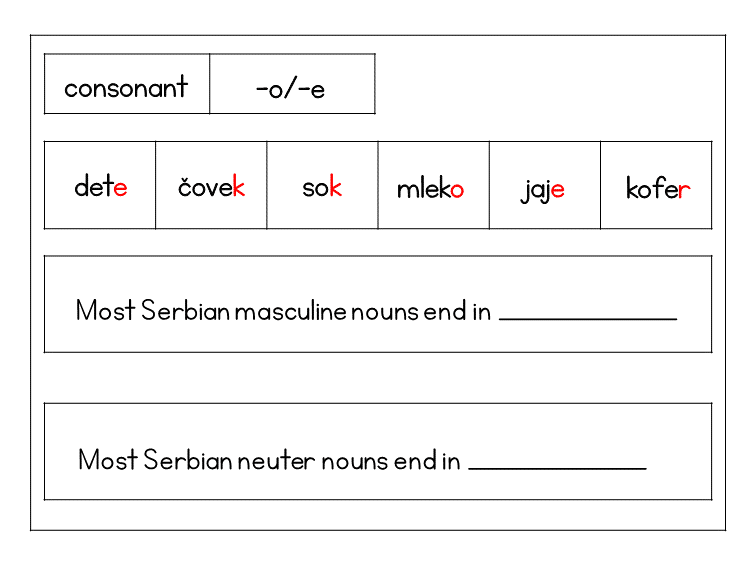
Answer keys: masculine nouns: čovek, sok, kofer; neuter nouns: dete, mleko, jaje
Most Serbian masculine nouns end in a consonant.
Most Serbian neuter nouns end in -e or- o.
Here’s an example of one masculine noun in the genitive singular:
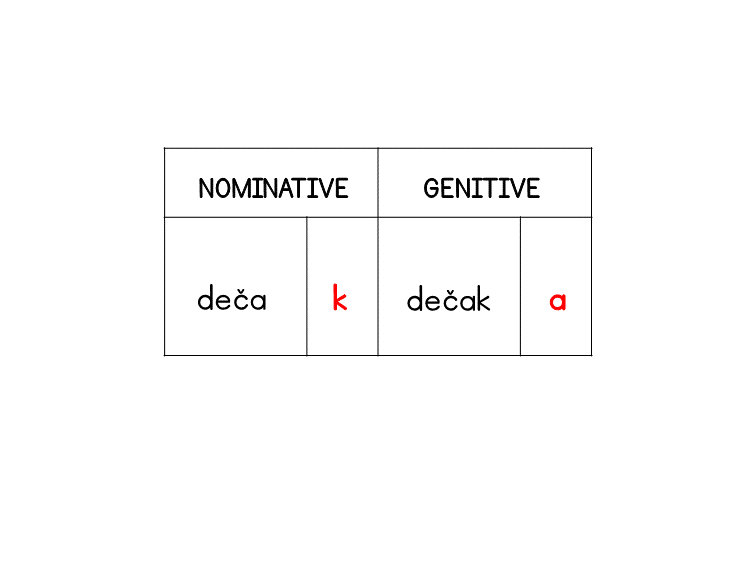
Take a look at the pattern. Simple! Right?
Singular Neuter Nouns in the Genitive
Before we move on to the pattern for neuter nouns, grab a pen and a notebook and write down all the examples and rules we’ve learned so far.
When you are learning grammar, it’s important to stay organized. And what better way to do that than to keep everything in one place?
Are you ready for the last pattern? Here it goes. Read the examples below, and pay attention to the endings in the nominative and genitive.
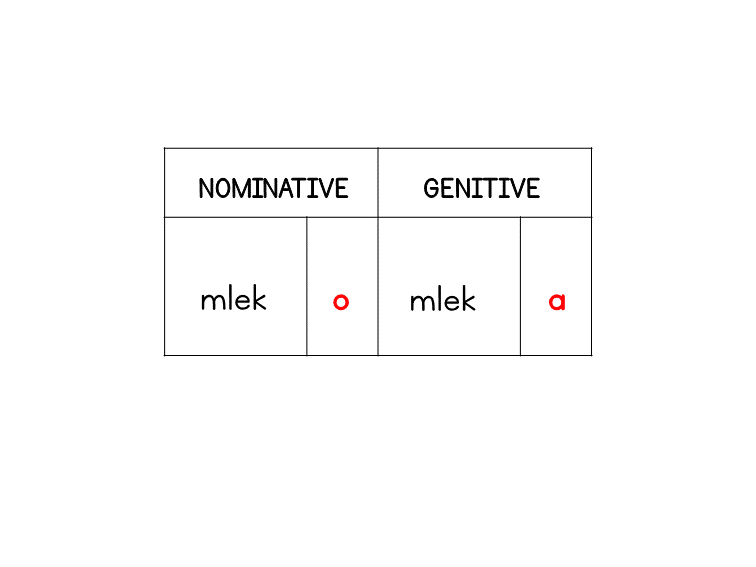
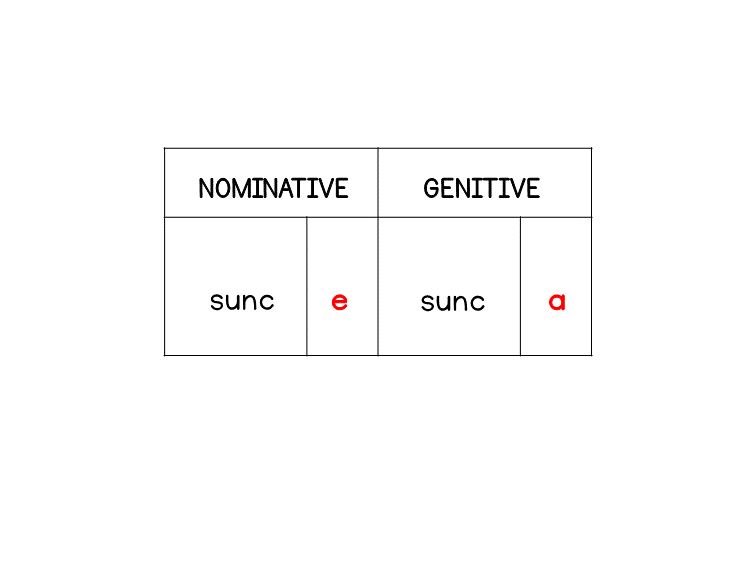
And the pattern is..
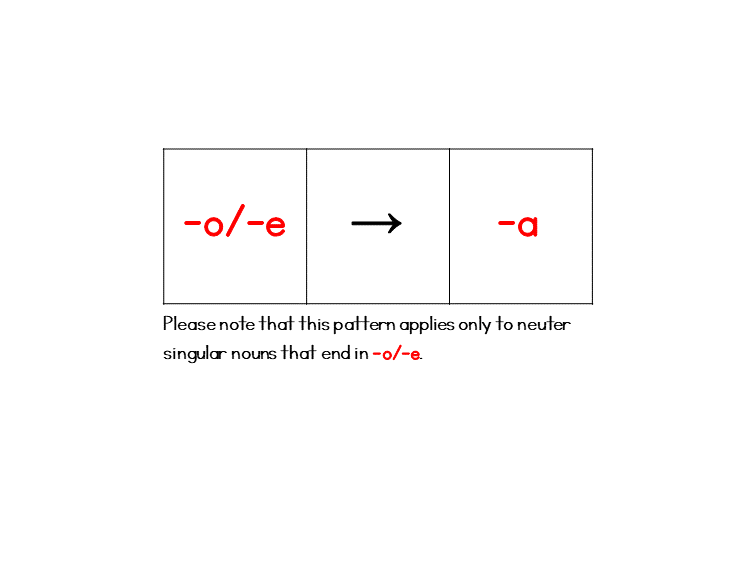
It’s time to put the patterns into practice!
Now that we’ve covered the masculine, feminine, and neuter patterns separately, let’s put the patterns together and see what we’ve learned.
It’s much easier when you take one puzzle piece at a time. But what happens when you have to review all three genders together, not to mention when we add the plural form for all three genders? Here are some useful tips to help you review all three genders without feeling overwhelmed.
TIP 1: Look at the ending of each noun. Does it end in a consonant, -a, -o, or -e? Then identify its gender: masculine, feminine, or neuter.
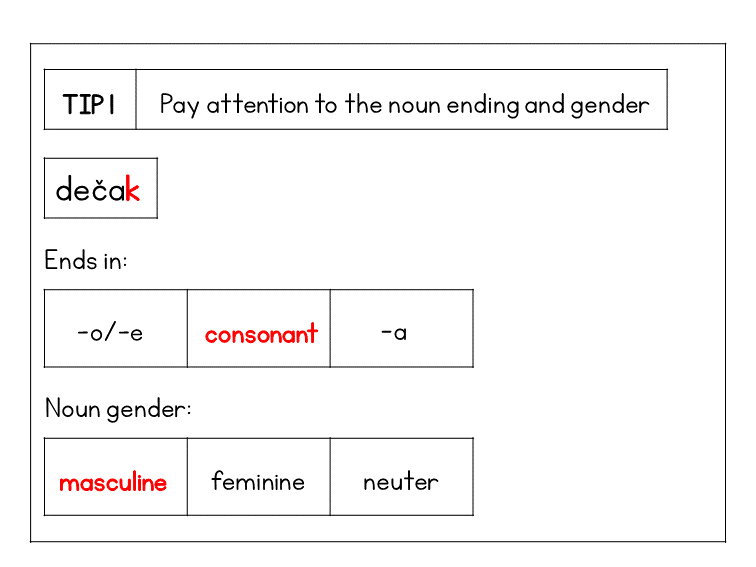
TIP 2: Review the patterns and examples for all three genders.
Take your time to go over the patterns and examples before moving on to the next step.
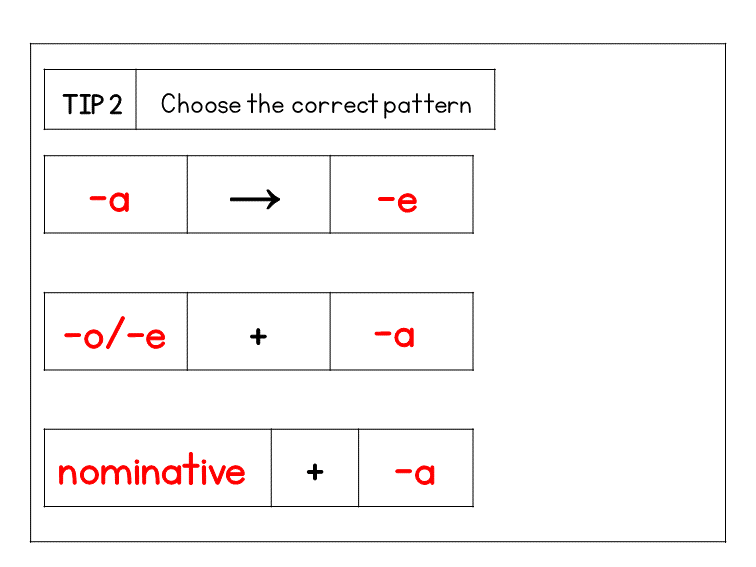
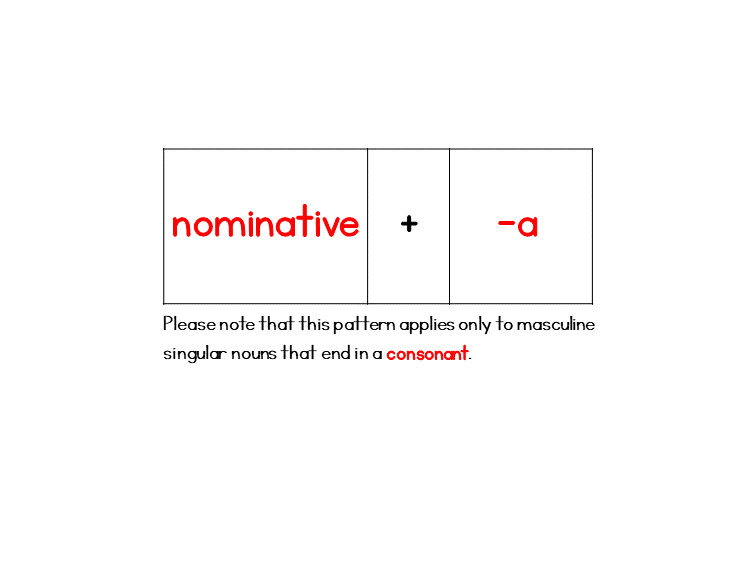
Answer key: nominative+-a
TIP 3: Write the genitive singular form
Now it’s time to put everything together! Look at each noun and write its genitive singular form.
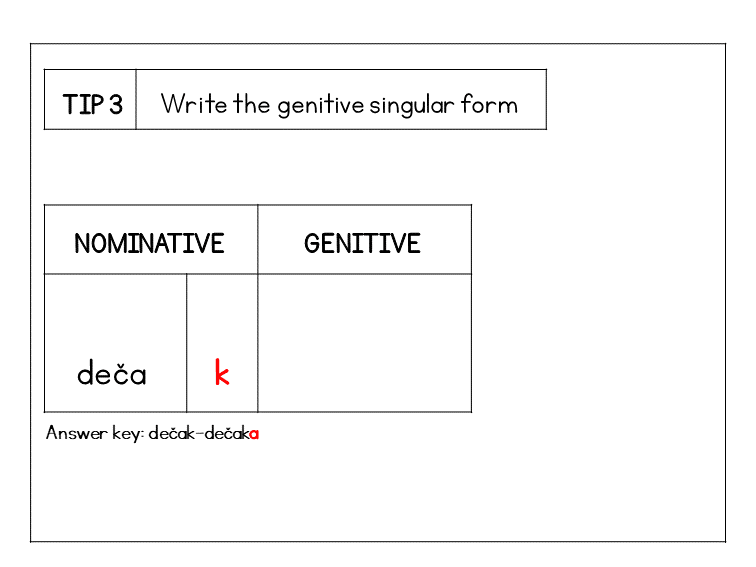
We’ve covered the rules, patterns, and examples. What is the next step? Practice, practice. practice!
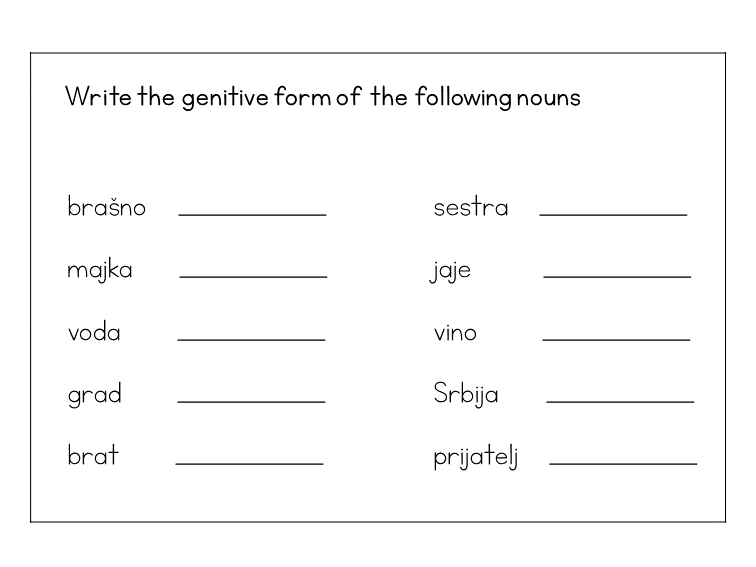
Answer keys: brašna, majke, vode, grada, brata, sestre, jaja, vina, Srbije, prijatelja;
Students often think the genitive is one of the most challenging Serbian cases because it has so many different uses. Let’s be honest: learning the Serbian cases is not a piece of cake! So, what can we do to make it easier? I have a solution. Just follow these three simple steps.
1. First, learn step by step.
2. Then, pay attention to the examples.
3. Practice, practice, practice!
Now, let’s take a look at the different uses of the genitive.
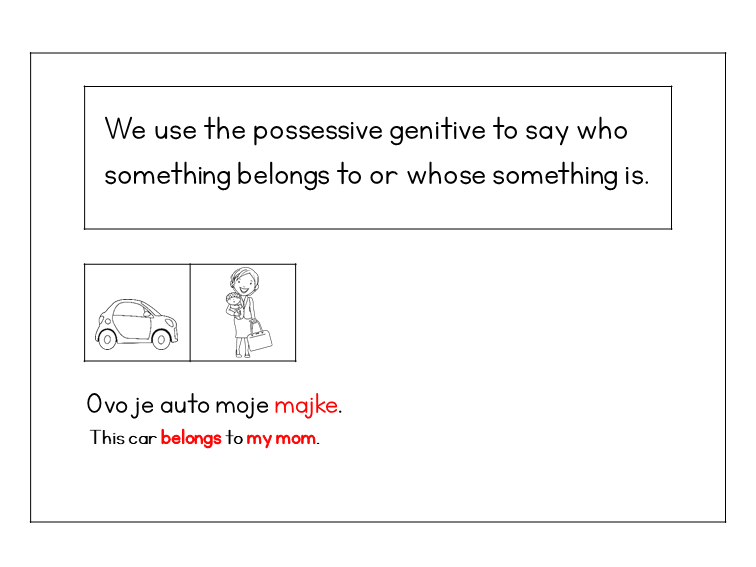
The Use of Genitive-POSSESSION
I know what you’re thinking: How will I memorize all the rules, uses, and patterns? Easy!
TIP 1: Write down the most important parts of this post in your notebook
TIP2: Read the nouns and identify the patterns
TIP 3: And here comes the most important tip: PRACTICE!
Once you have mastered the rules and patterns, it’s showtime!
This is the moment when you get to apply everything you have learned and use grammar to build sentences you can use in real-life situations.
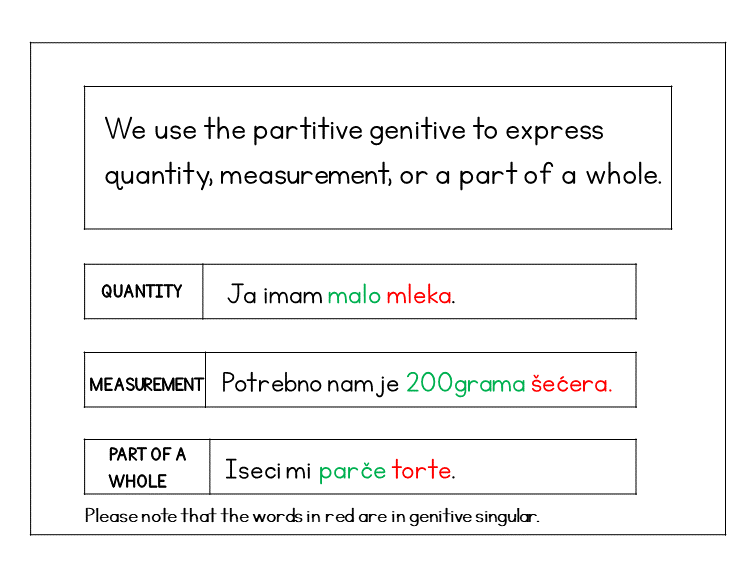
The Use of Genitive-PARTITIVE
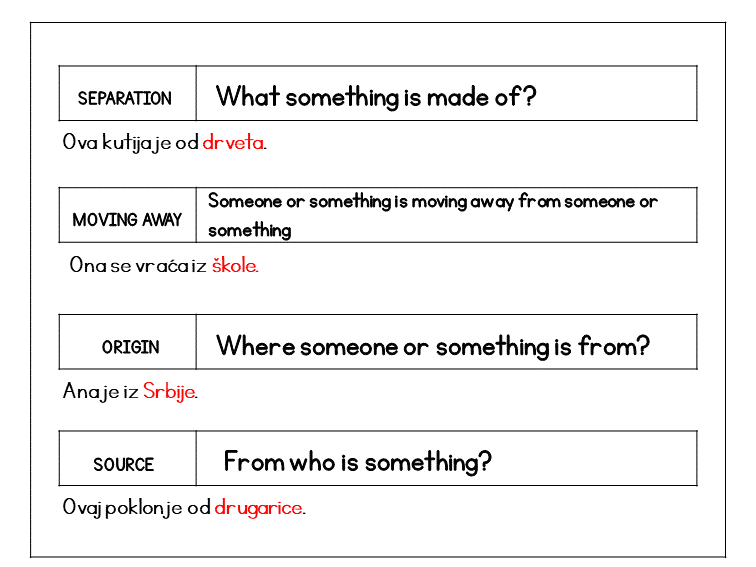
The Use of Genitive-ABLATIVE
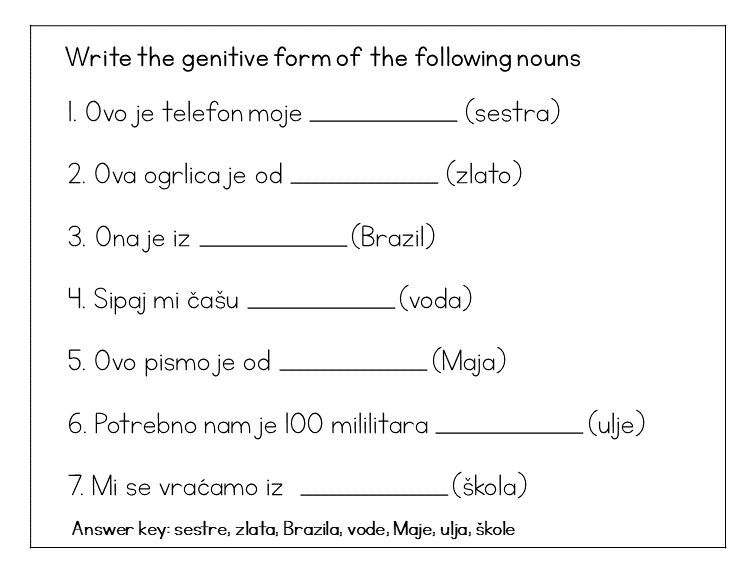
Let’s practice!
Serbian Genitive Case Plural Form
Here comes the last, but certainly not the least important, puzzle piece: the genitive plural form of Serbian nouns!
Plural Masculine Nouns in the Genitive
Serbian masculine nouns follow different patterns when forming the genitive plural.
Pattern 1
Before we introduce the first pattern, take a look at the example below.
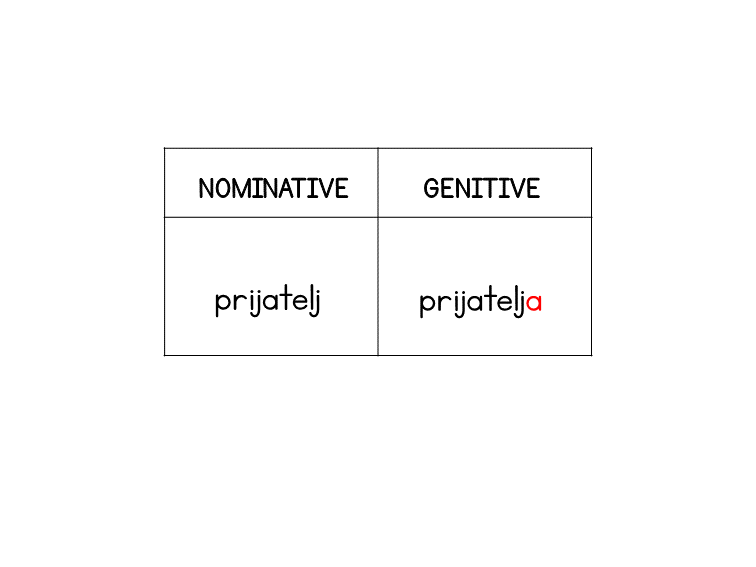
Now complete the pattern!
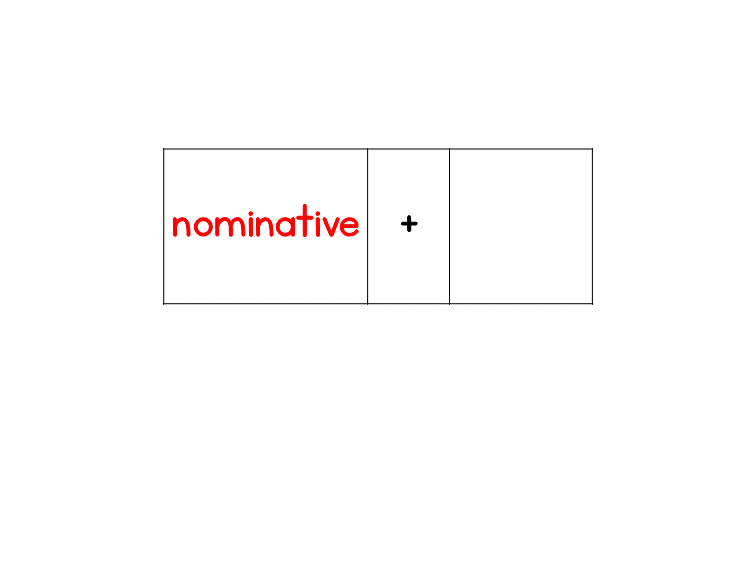
Answer key: nominative+-a
Some masculine nouns form the genitive plural by adding the ending –a.
Are you ready for the second pattern?
Pattern 2
Take a closer look at the example below.
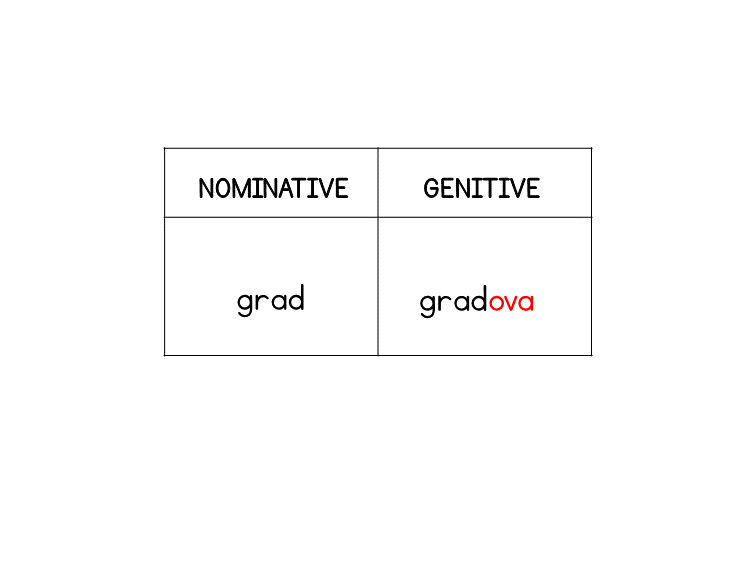
Complete the pattern.
Answer key: nominative+-ova
Practice, practice, practice!
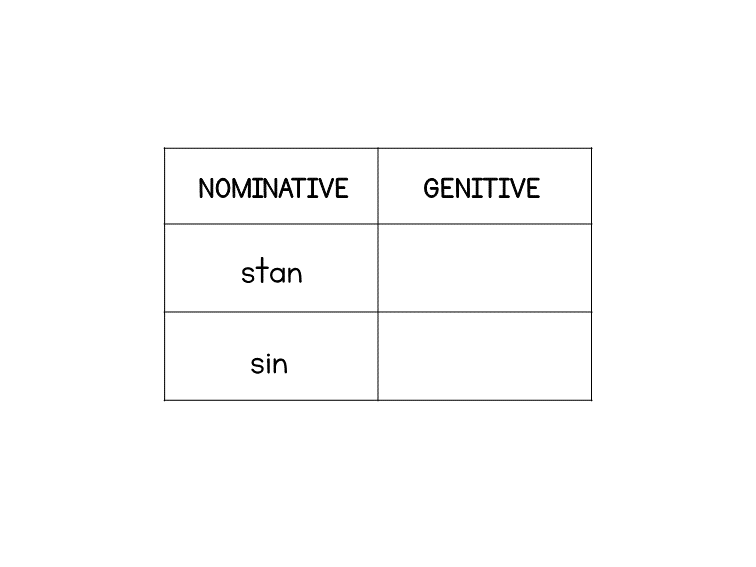
Answer keys: stanova, sinova
Pattern 3
Take a closer look at the example and the pattern below.
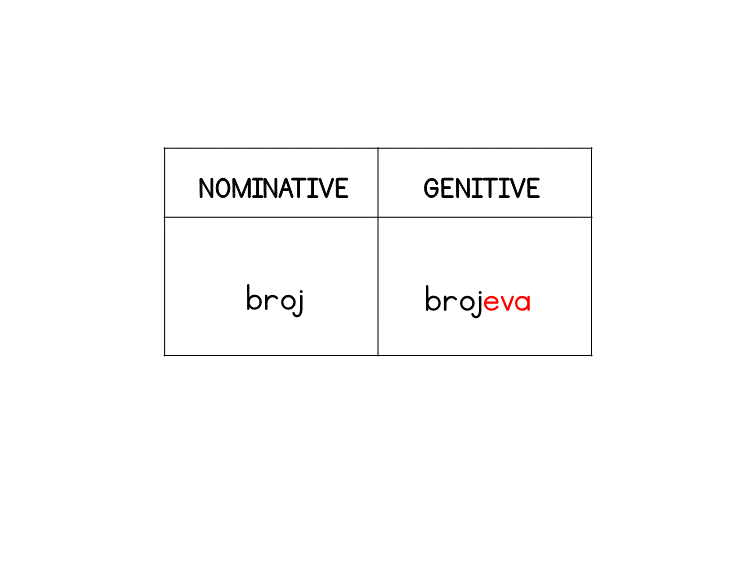
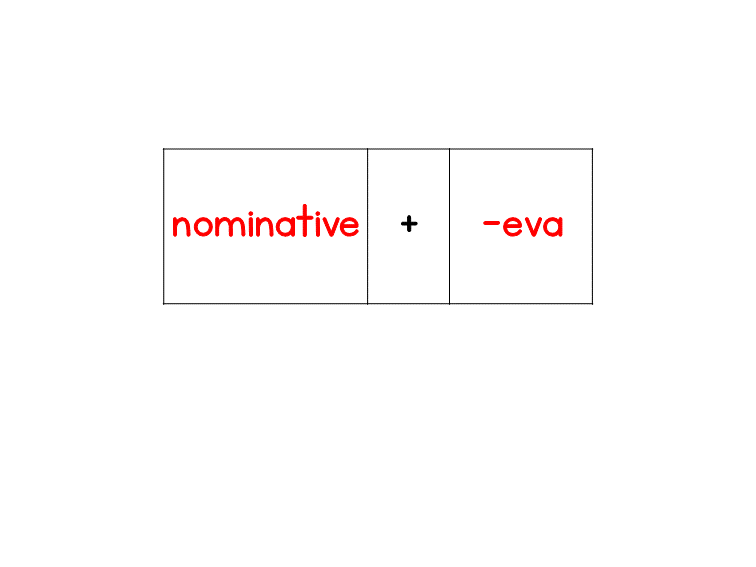
Please note that these are the most common patterns used to form the genitive plural of masculine nouns.
Plural Feminine Nouns in the Genitive
What if I told you that you don’t have to learn the ending for some feminine nouns in the Serbian genitive plural?
Yes, you heard that right!
Some Serbian feminine nouns that end in –a have the same form in the nominative singular and genitive plural. Let’s check out one example together!
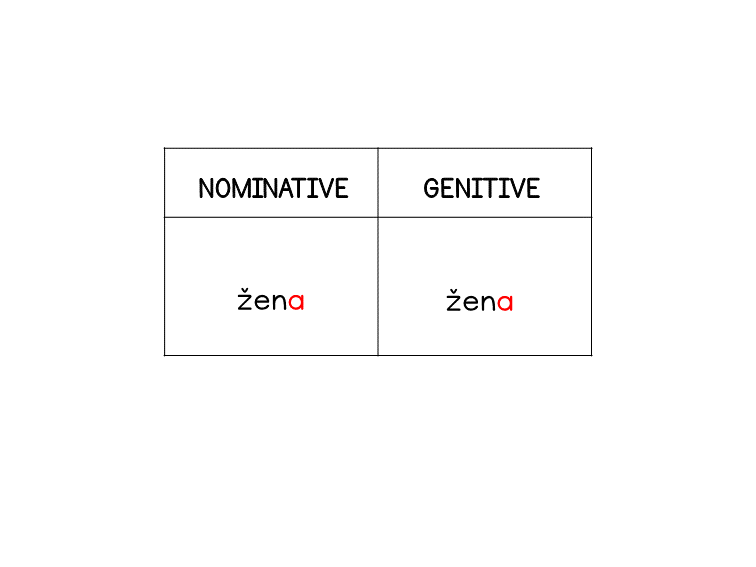
The noun žena has the same form in the nominative singular and genitive plural.
Plural Neuter Nouns in the Genitive
As we mentioned before, most neuter nouns in Serbian end in –o or –e. But what about the plural neuter nouns in the genitive?
The noun selo ends in –o in nominative singular ends and in the genitive plural it ends in –a.
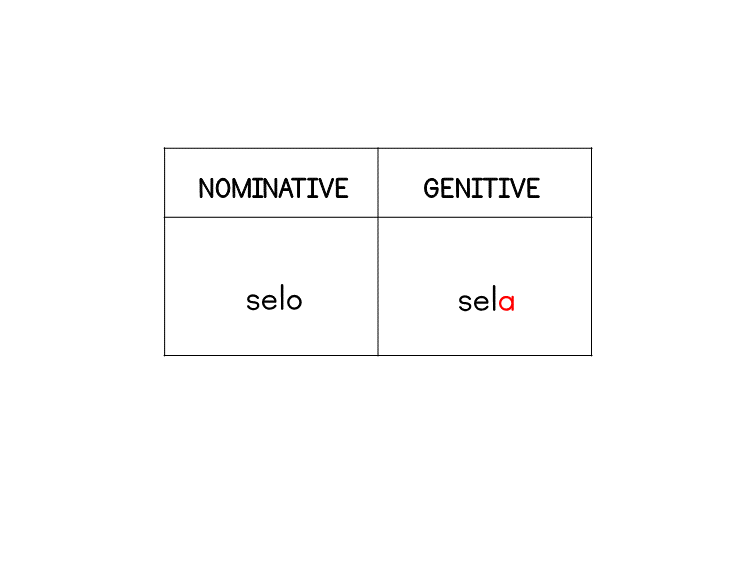
Grab a piece of paper and write down the pattern.
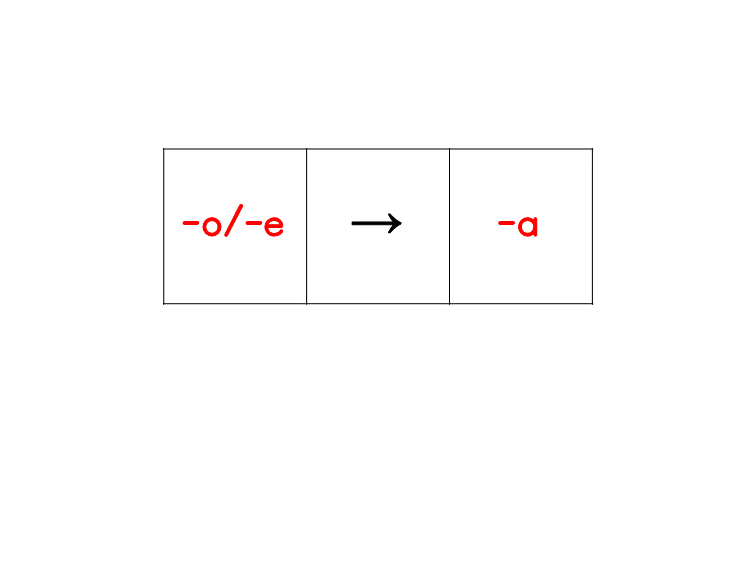
Plural masculine nouns. Check. Plural feminine nouns. Check. Plural neuter nouns. Check. Now that we’ve reviewed the patterns, you are all set for the next step. Practice.
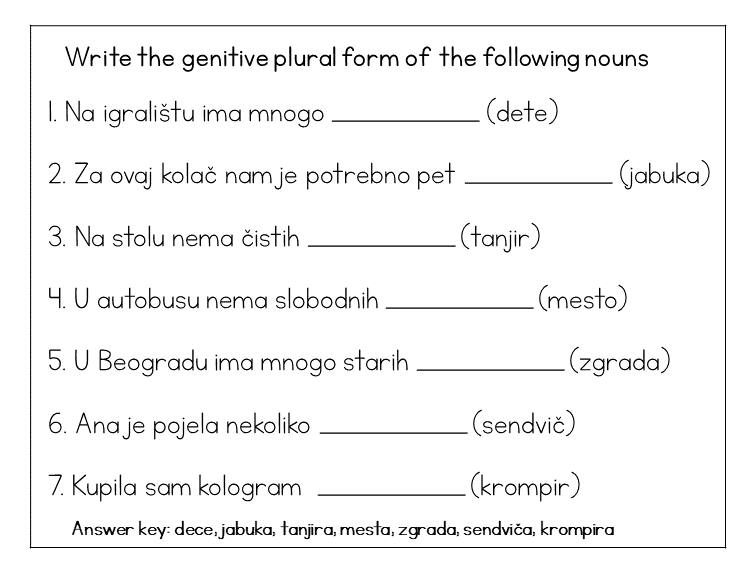
What should I do next? Take a break! Turn off your computer and go for a walk. Just don’t think about the Serbian genitive case for a while!
But before you do that, I encourage you to check out my Serbian Genitive Set and save the link so you can easily find it whenever you need more practice.